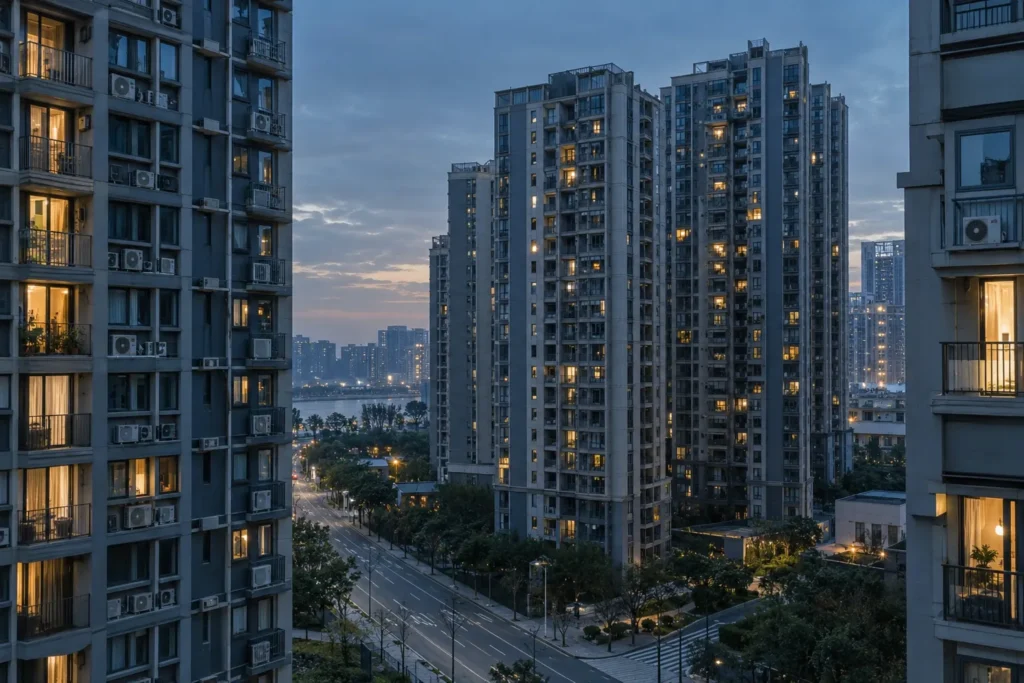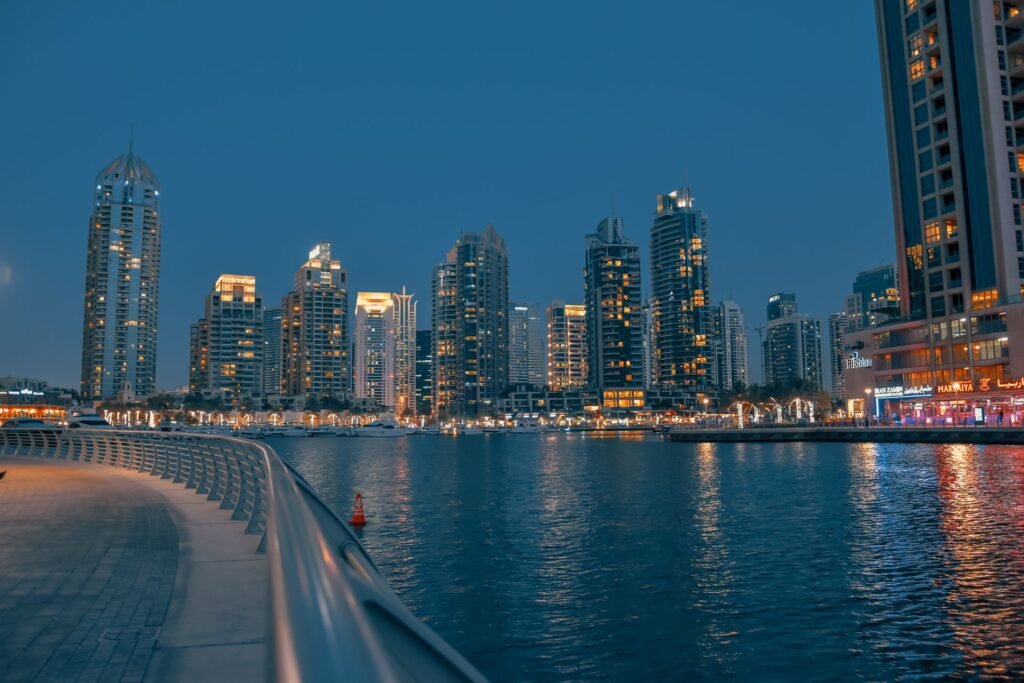
For twenty years, the answer to “where should I base my Middle East business?” was simple. It was Dubai. Saudi Arabia has just made that answer complicated. Its regional headquarters mandate has quietly rewired the competitive map of the Gulf, and the most strategic companies have stopped treating the region as a choice between two cities. They are learning to run both.
What Saudi Arabia actually did
The Regional Headquarters programme, launched in 2021 and effective from 1 January 2024, is administered jointly by the Ministry of Investment and the Royal Commission for Riyadh City. Its central rule is blunt. From that date, Saudi government entities will not award contracts to multinational companies whose regional headquarters is not located in the Kingdom, with only limited exceptions.
The mechanism is a gate, not a suggestion. Under the framework, a company without a Saudi RHQ would generally need to bid at least 25 percent below the lowest competing offer to be considered for a government contract, a margin that is rarely financially viable. On the other side of the gate sits a generous incentive package: a 30-year exemption from corporate income tax and withholding tax on RHQ activities, alongside relief from Saudization requirements and eased visa rules. The stick and the carrot point in the same direction, which is toward Riyadh.
Why it worked, fast
The policy has outperformed its own targets. Saudi Arabia set out to attract 500 regional headquarters by 2030, and by the end of 2025 the Royal Commission for Riyadh City reported that more than 700 international companies had established RHQs in the capital, years ahead of schedule. The roster includes Amazon, Google, PwC, Deloitte and, more recently, BlackRock, which secured approval to base its regional headquarters in Riyadh.
The reason for the pull is straightforward. Access to the largest government-spending market in the region is now conditional on physical presence. Saudi government spending runs into the hundreds of billions of dollars a year, channelled through Vision 2030 gigaprojects and the Public Investment Fund into everything from NEOM to infrastructure, health and energy. To reach that spending, a company must put real substance on the ground: an RHQ with at least 15 full-time employees within the first year and at least three senior executives based in the Kingdom, exercising genuine regional decision-making. This is not a brass-plate requirement. It is a demand that leadership physically move closer to the money.
The 2026 refinement
Saudi Arabia has since shown it will calibrate rather than simply enforce. In early 2026 the procurement rule was refined to give government entities more room in technically specialised sectors, allowing a non-RHQ company’s bid to be accepted where only one technically compliant offer is received, or where the non-RHQ bid is both technically best and at least 25 percent cheaper than the second-best offer. Contracts below roughly one million riyals were already exempt. These are not a retreat. They are a mechanism to stop the rule from blocking essential purchases where local capability is thin, while preserving its core intent. The direction of travel remains firmly toward presence in the Kingdom.
What this does to the UAE
For two decades the UAE was the default regional base, and it retains formidable advantages. Free-zone flexibility, quality of life, a deep and established ecosystem, world-class connectivity, and crucially, no equivalent mandate. The UAE competes by being the most attractive place to be, not by making presence compulsory. Global banks and asset managers keep expanding into ADGM and DIFC, and the country’s appeal to founders and capital is, if anything, strengthening.
But the RHQ mandate has removed one thing the UAE could previously take for granted: the assumption that it is the automatic choice for any company with regional ambitions. A business that wants Saudi government revenue can no longer simply run everything from Dubai and bid into the Kingdom from a distance. The gate is real, and it changes the calculus for a whole class of companies.
The two-capital strategy
Here is the insight that matters most. Framing this as “Dubai or Riyadh” is the wrong question. The companies navigating it best are not choosing. They are running a two-capital model. They keep their operational weight, their lifestyle base, and often their legal domicile in the UAE, drawing on its free zones, talent and ecosystem, while establishing a qualifying RHQ in Riyadh to unlock the government and PIF-driven contracts that require it. You do not pick a side. You structure across both.
For an established UAE-based founder scaling regionally, the practical implication is specific. The formal mandate targets multinationals contracting with the Saudi government, so an early-stage company selling to private clients in the UAE is not immediately caught by it. But the strategic principle scales down. If your growth thesis includes Saudi government or PIF-linked revenue, and given the scale of Vision 2030 spending, for many sectors it increasingly does, you need to plan a Saudi presence deliberately rather than assume you can reach that market from Dubai. That means understanding the RHQ thresholds, budgeting for genuine substance, and weighing the cost of a Riyadh presence against the size of the prize.
The honest trade-offs
Running two capitals is not free, and it is not right for everyone. It means duplicated senior leadership, two compliance regimes, split management attention, and the real expense of relocating decision-makers to a market with its own tax, labour and economic-substance rules that authorities actively police. For a founder whose market is primarily private-sector UAE and wider GCC, Dubai alone remains the correct and cheaper base. The two-capital model earns its cost only when a meaningful share of the opportunity sits behind the Saudi government gate.
The takeaway
The RHQ mandate is the clearest signal yet that the Gulf is no longer a single market with Dubai at its centre. It is two large and genuinely competitive economies, each building gravity in a different way. The UAE pulls companies in by being the most attractive place to live and operate. Saudi Arabia pulls them in by making presence the price of admission to its spending. Neither approach is going away, and the tension between them is now a permanent feature of doing business in the region.
The founders who win the next decade will not pick a side out of loyalty or habit. They will read the map as it actually is, a region that has stopped offering one obvious home and started rewarding those who can be strategically present in more than one. Knowing when a single base is enough, and when the two-capital structure is worth its cost, is fast becoming one of the defining strategic judgments for any company with regional ambition.
Sources: Royal Commission for Riyadh City, Regional Headquarters Program, 2025 to 2026; Saudi Ministry of Investment (MISA), Rules Regulating the Licensing and Supervision of Regional Headquarters, draft rules September 2025; Mayer Brown, Updates on Saudi Arabia’s Regional Headquarters Program; Vistra, Saudi Arabia’s Local Headquarters Rule; Middle East Briefing, Saudi Arabia Refines RHQ Procurement Rule, March 2026; Arab Gulf States Institute in Washington, Saudi Regional Headquarters Program analysis; Legalmondo, Saudi Arabia Draft Rules on Regional Headquarters, September 2025.