The Manchester Boy Who Built the Tallest Home on Earth
In 2005, a first-time real estate developer stood in front of an empty plot of land in Dubai Marina and told the world he was going to build a 90-storey tower on it.
He had never built a building before. Not a house. Not a low-rise. Not a shopping centre. His previous life had been assembling computers on a market floor in Manchester and running one of the UK’s biggest IT distributors. Now he was proposing to erect the tallest residential building on Earth.
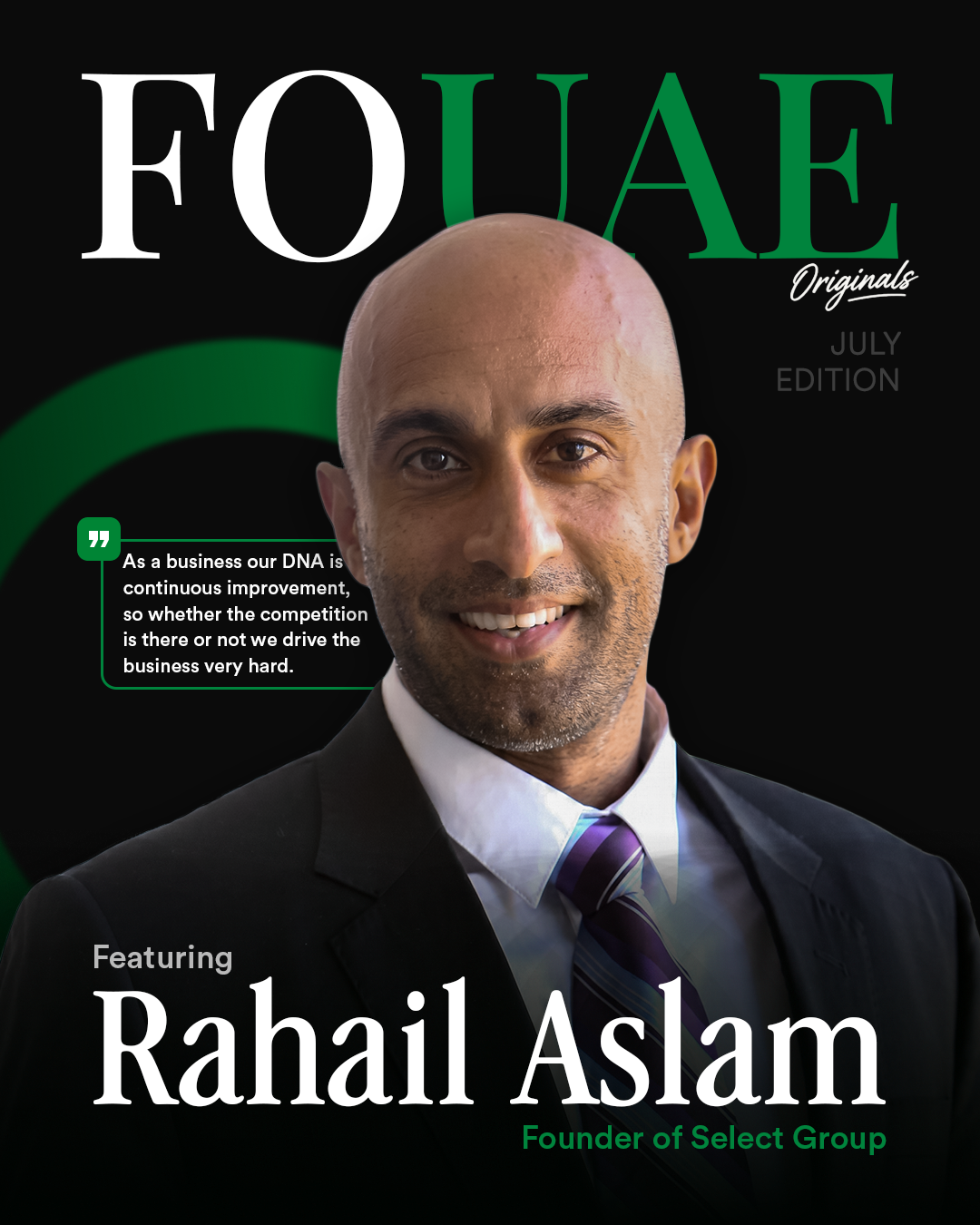
His name was Rahail Aslam. Six years later, in May 2011, he handed over the keys to The Torch. Three hundred and fifty-two metres tall. Eighty-six floors above ground. Six hundred and eighty-two apartments. It beat Australia’s Q1 by 25 metres to claim the title of the tallest residential tower on the planet.
By that point, Aslam had been building for a long time. Not skyscrapers. Just enough to keep his family afloat.
Manchester, Four Jobs, No Plan
Rahail Aslam left school at fifteen. His parents were immigrants who had come to Britain from South Asia in the postwar decades, part of the generation that arrived on labour visas to work in the country’s mills, transport network, and factories from the shop floor up. There was no family business to walk into. There was no safety net. There was a house to keep running.
For the twelve months after leaving school, he worked four jobs. Various supermarkets, various stores, whatever paid. In his own words, in an interview with CEO Middle East years later: “I was focussed on responsibility to my family. I was working four jobs to help my parents. I worked to pay the bills.”
Somewhere in the middle of those twelve months, he also secured a full-time apprenticeship as an electronics engineer. By seventeen, he was competent enough at repairing computers that he began building his own.
The timing mattered more than the skill. In the late 1980s, the home computer revolution was just kicking off in Britain. Big-brand PCs were expensive. What working-class families actually wanted was a machine they could afford, which increasingly meant something assembled from parts. Rahail would go to the market, buy a case, a motherboard, a floppy drive, take them back to his bedroom in Manchester, put them together, and sell them locally.
Then he did what most seventeen-year-olds don’t. He scaled.
The Billion-Pound Bedroom
By the time he was in his mid-twenties, Rahail was running one of the largest importers and distributors of IT hardware and Microsoft software in the United Kingdom, with annual revenues of over £1 billion.
There is a version of this story that skips over that detail. It should not. A billion pounds in revenue, run by one founder, with no venture capital, no institutional investors, no easy inheritance. It is the kind of achievement that would be a lifetime peak for most entrepreneurs.
For Rahail, it was the launchpad.
The IT boom of the late 1990s had made him rich. It had also made him nervous. Distribution margins were compressing. New entrants were flooding the market. And by 2000, the whispers about a dot-com bubble were becoming a roar. “I did very well, but it became very competitive around that time,” he later recalled. “You saw the bubble burst in 2000. Luckily, around the same time I started to diversify a lot of our investments in to real estate in the UK.”
The exit was not a sudden pivot. It was a fade. He kept running the IT business through the early 2000s while quietly building the second business behind it. Real estate first in the UK. Then Dubai.
The Layovers
He had been noticing Dubai for years. His IT business took him regularly to Taiwan and Hong Kong. His flights, more often than not, connected through Dubai. He watched, on layover after layover, a city move from crane to crane. Something was happening.
In 2002, he made the move. “We just packed our bags, sold our assets and set up shop in Dubai,” he says.
Select Group was founded that same year. For the first three years, it was a passive investment vehicle. Rahail did what he had done in Manchester in the 1980s. He watched. He learned. He waited for the moment to build.
In 2005, he acquired his first piece of land. It was in Dubai Marina. He decided, on his very first project, to build a 90-storey tower.
The Torch
Construction broke ground in October 2005. In his own words, it was “quite ambitious, to go from nothing to a 650-apartment tower in Dubai Marina.”
Then, three years in, the world came apart.
The 2008 financial crisis stopped Dubai’s construction sector cold. Financing arrangements collapsed. Projects that had been racing to the sky went dark. The Torch’s original completion date of 2008 was pushed to 2009, then again to 2011.
But Rahail delivered. In May 2011, Select Group began handing over the completed tower to its investors. At 352 metres and 86 floors above ground, The Torch had officially surpassed Q1 Tower on Australia’s Gold Coast by 25 metres. It was, in that moment, the tallest residential building anywhere on the planet.
A first-time developer, from Manchester, had delivered his debut project as a world record.
The Empire
The Torch was just the opening chapter.
Over the next fifteen years, Rahail delivered ten completed towers in Dubai Marina alone. Marina Gate. Studio One. Jumeirah Living. No.9. He expanded into Business Bay with Peninsula, a six-tower waterfront master community of over 3,300 residences that sold out in 2024. He launched Six Senses Residences Dubai Marina, an ultra-luxury project of 251 units across 122 floors, in the same year. In 2025, he acquired the Radisson Blu Hotel in Dubai Media City for $59 million.
Today, Select Group’s combined portfolio spans over 20 million square feet with a gross development value in excess of AED 20 billion. As of March 2025, the company had delivered more than 7,000 homes worth over $5 billion, with another 6,000 under construction. Interests have expanded into the UK and continental Europe. Rahail stepped up as Chairman in 2024 after 22 years as founding Group CEO.
The Lesson
Rahail Aslam did not grow up dreaming of Dubai’s skyline. He grew up counting the jobs it would take that month to keep his family’s bills paid.
Asked once whether he had ever imagined, back in his four-jobs years, that he would one day own a stretch of Dubai Marina, he answered: “No, not at all. I was focussed on responsibility to my family.”
That sentence is the entire lesson.
The biggest empires are rarely built by kids with an early fantasy of building empires. They are often built by kids with an early responsibility they were not old enough to carry. They learn, before anyone else their age, that the only way out is through. And then they never stop moving.
The boy assembling PCs on a bedroom floor in Manchester was not aiming for a 350-metre tower in Dubai Marina. He was aiming for the next bill.
The rest just happened while he kept working.