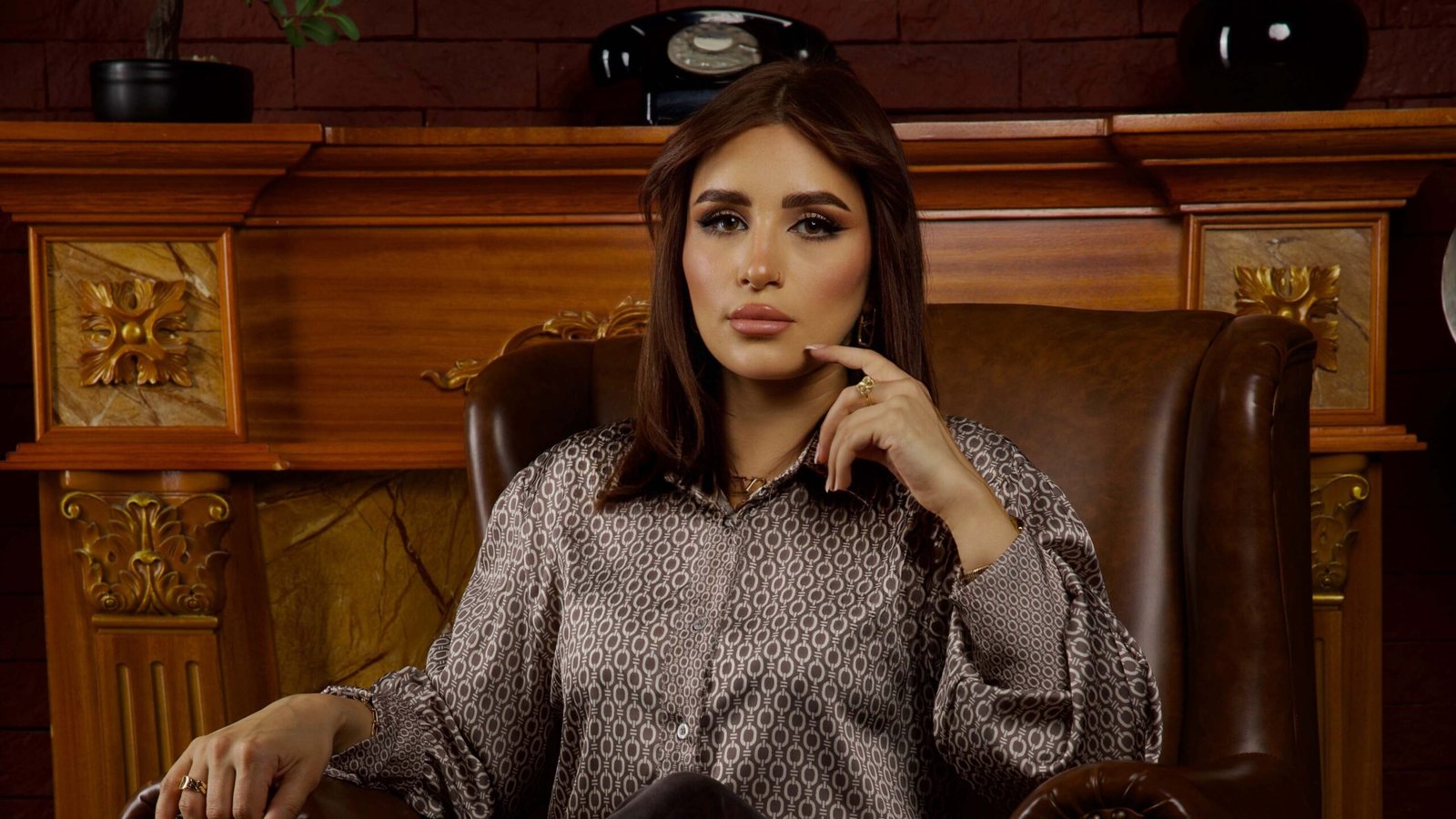
The Village Girl Who Refused to Be a Victim
There is a specific moment Safia Tahar can name, down to the second, when her life changed direction.
She was in Algeria. She was crying so hard the day had become something she wanted to survive rather than live. She could not afford bread. She could not afford cheese. She had recently done what everyone around her considered reckless. She had quit a teaching job that paid her 150 US dollars a month.
She opened Instagram. A short video appeared in her feed. A woman was speaking, saying that women like them were not victims of anything.
Something popped inside Safia’s chest.
She stopped crying.
She made a decision, in that instant, that would go on to reshape everything. In her own words to herself: “No more victimhood. I am not poor. I am a distinct girl, a unique one. I have to make my life different.”
She got up.
Within a month, she had opened a company. She had traveled outside Algeria for the first time. She had left her family home. Women from Morocco, Tunisia, Egypt, Jordan, and Dubai had begun calling her to teach them.
Today, Safia Tahar is one of the most-followed Arabic-speaking transformation coaches in the world. She has trained more than 10,000 people in person and over 20,000 online across audiences in more than 80 countries.
She got here by making that same decision, in different rooms, over and over.
The Village
Safia was born in Algeria in a small village, in what she calls a very humble family. She was, by her own account, the most different person in it. The one who thought differently, who saw things differently, who was drawn to something no one around her had a name for.
She took a teaching job that paid 150 US dollars a month. In 2015, she watched a YouTube video by an Arabic coach named Dr. Ahmed Emara, who was speaking about how he had deliberately changed his own life. She had never encountered this framing before, that a life was something a person could change on purpose. She took his online course, Quwat El Kalima wa El Tafkir (The Power of Word and Thought), and in parallel took whatever 20 and 30 dollar programs her salary allowed.
Eventually she quit the teaching job. It was, in her own words, “so hard.”
Then came the day she could not buy bread.
The First Explosion
After the Instagram moment, Safia began offering coaching sessions. Word spread fast.
At the end of 2019, she organized her first live event in Algeria as the sole speaker. Twelve hundred people attended. She had run no ads. She had promoted the event only through her Instagram Stories. Buses arrived from every corner of the country. “Everyone was talking about Safia,” she remembers. “Who is this girl who is changing the game?”
Then COVID arrived. She moved online. Her first online course was called The Shift. More than ten thousand people signed up.
When They Called Her a Heretic
At the end of 2020, Safia got married. She was famous by then, and famous women in traditional societies attract a particular kind of attention. Within three or four months, she began receiving heavy attacks on social media. People said her work on self-growth and consciousness was against her religion. They called her an atheist. They called her a Freemason.
She was pregnant when the attacks were at their worst.
She had made a decision years earlier. If she ever had a child, she would not raise them in a place where the version of her they saw was under siege. In 2021, pregnant with her first child, she left Algeria for Dubai.
The All-Alone Years
Between 2021 and 2024, Safia was either pregnant, giving birth, or holding a newborn. She had no material support. She had no human support. Her husband could not build a life in the UAE and was steadily trying to pull the family back. Every hard week, his answer was the same. Every hard week, hers was different.
She could afford Dubai. He could not.
In 2022, she bought her first apartment in Dubai from a friend. Then another. Then another. She began investing in cryptocurrency and gold. From the outside, she was thriving. She was also, by her own admission, an inexperienced money manager. She was making money faster than she was learning what to do with it.
The Fraud
In 2023, an acquaintance Safia had known for ten years came to her with an investment. He said he was placing money in stocks that returned 10 per cent a month. She trusted him. She invested. Others in her circle followed her judgment and invested too.
It was a fraud.
Her own summary is short. “I decided from that point not to trust anyone with money. I would go and learn about wealth by myself.” She is still, in 2026, helping the other people who lost money.
That was the moment she began flying to the United States. She attended her first Tony Robbins event in November 2024. Then December 2024. Then February 2025, March 2025, August 2025, December 2025. She attended events with Grant Cardone, Gary Vee, and Dean Graziosi. She estimates she has now completed about 60 per cent of what Robbins offers, most of it more than once. His signature program Date with Destiny is one she does every year.
The Coming Back
Also in 2024, Safia divorced.
In her own framing, the divorce was not a rupture. It was a clarification. She had spent years with a partner who, she says, did not believe in her work. “He was just trying to make it feel good, trying to pretend everything was going right. Until I received a clear message from the divine. You have to stop here.”
“I almost lost myself in that relationship,” she adds.
She says 2025 was the year she came back. She says 2026 is the year she is still coming back.
What She Teaches Now
The core teaching is that the people in her audience are, in her own signature line, “not who they think they are. They are much bigger to the extent that they cannot even imagine.”
She has other lines her students recite back to her.
“Never give up. Life is for people who never give up.”
“Love heals everything. If you’re lost, just go back to love. If you’re lost, just remember the source you came from.”
“When you get to see the light in others, it means you have started to see your own.”
She has traveled to nearly thirty countries to keep learning. She has done retreats in Bali. She has sat with indigenous communities in the Amazon. What she gives, she says, is not information. “I don’t speak just to speak. I share my own experience.”
One student, who had studied with several of the world’s better-known coaches, once told her: “I have traveled around the world to big and well-known coaches, but with Safia, it is a completely different feeling, a whole different experience.”
Outside of her programs, she quietly supports orphans and families.
The Lesson
Safia Tahar was told, in three different rooms, that her life could not go where she was pointing it. Once by poverty. Once by strangers on social media accusing her of blasphemy. Once by a marriage, a fraud, and a country that no longer fit her.
Each time she refused. Each time the refusal cost her something.
The teacher from a humble Algerian village who once could not afford bread became one of the most influential Arabic-speaking coaches alive.
Not because she was gifted. Not because she was lucky.
Because she made a very specific decision, on a very specific day, that she was not who anyone else said she was.
She has been repeating that decision, in different rooms, ever since.