For years, the UAE investment conversation had exactly two chapters. Dubai and Abu Dhabi. Everything else was a footnote, and Ras Al Khaimah, the quiet northern emirate of beaches and mountains, was the footnote. That is no longer true. One resort, one regulatory first, and a wave of capital have turned RAK into the most talked-about frontier in the country, and the shift is worth understanding before the rest of the market catches up.
The catalyst
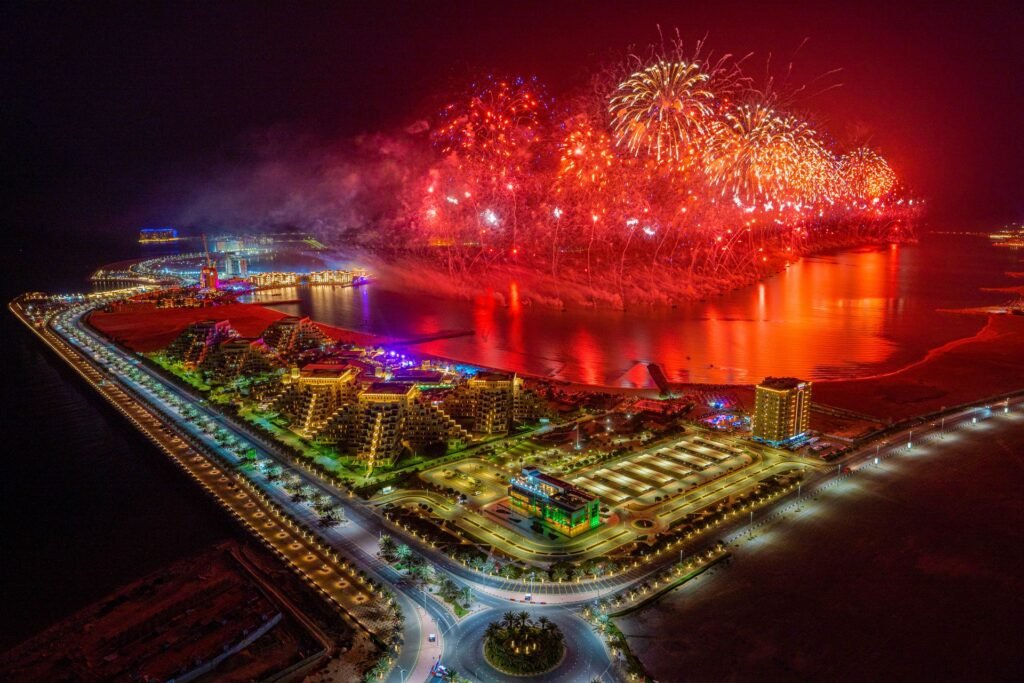
The single event reshaping RAK is Wynn Al Marjan Island, a roughly 5.1 billion dollar integrated resort rising on a man-made island off the RAK coast, scheduled to open in early 2027. It is a joint venture between Wynn Resorts, the RAK master developer Marjan, and RAK Hospitality Holding. At 305 metres and 70 storeys, it will be one of the ten tallest hotels on earth, with around 1,530 rooms, more than 20 restaurants, a marina, and a scale of ambition RAK has never seen.
But the rooms are not the story. The story is what sits on one of its floors: the first regulated gaming floor in the United Arab Emirates, and in the wider Middle East and North Africa region.
Why gaming is structural, not a novelty
It is easy to dismiss a casino as a curiosity. That misreads what actually happened at the federal level. In 2024 the UAE removed gambling from its federal Civil Transactions Law and established the General Commercial Gaming Regulatory Authority, a federal body that licenses and oversees commercial gaming across all seven emirates, led by former MGM Resorts chief executive Jim Murren. On 5 October 2024, that authority issued the UAE’s first Commercial Gaming Facility Operator License to the Wynn project, carrying a 15-year exclusive gaming licence for Ras Al Khaimah.
This is a country building an entirely new regulated industry from scratch, and RAK secured the anchor tenant. The economic logic is enormous. Analysts project the UAE could become the fourth-largest gaming market in the world, behind Macau, Las Vegas and Singapore. The reason is geography. Wynn Al Marjan Island sits within an eight-hour flight of roughly 96 percent of the world’s population, a catchment that even Macau, at around 70 percent, cannot match. RAK did not just win a resort. It won first-mover position in a market that could rival the biggest gaming destinations on the planet.
Why RAK, and not Dubai
The obvious question is why the northern emirate rather than the obvious powerhouses. The answer is that RAK moved first and moved decisively. It offered cheaper land, a master-planned island purpose-built for the project, genuine proximity to Dubai (the resort is roughly a 45 to 50 minute drive from Dubai International Airport), and a government willing to reorganise its entire tourism strategy around one transformational anchor. RAK is targeting 3.5 million annual visitors by 2030, and the Wynn project is the engine meant to get it there.
The capital response
The market has already repriced RAK, and the numbers are striking. On Al Marjan Island specifically, average prices have reached around AED 3,073 per square foot, which now sits above parts of Downtown Dubai. Prices on the island have climbed roughly 40 percent since 2023. Across the emirate, residential capital values rose about 12.7 percent in 2025, and the total RAK real estate market reached a value of around AED 15 billion for the year. For perspective, early 2023 entry prices on Al Marjan were between AED 1,200 and 1,600 per square foot, meaning the earliest investors have nearly doubled their money on paper. The biggest names in UAE real estate, including Aldar, Emaar and Ellington, are now building branded residences on the island.
The honest risks
A frontier is, by definition, higher risk, and a credible analysis has to name the caveats plainly.
First, single-project dependence. The entire re-rating rests heavily on one resort delivering on time and performing once open. Wynn’s track record is strong, but concentration this tight is a genuine exposure.
Second, speculative heat. Off-plan transactions made up roughly 88 percent of RAK deals in the fourth quarter of 2025. That is precisely the profile that can overheat, because off-plan buyers are often trading paper gains rather than holding real assets, and sentiment can reverse faster than construction completes.
Third, regulatory newness. The UAE gaming framework is brand new and untested at scale. First-mover advantage cuts both ways, and the first market to be built is also the first to encounter whatever the rulebook has not yet anticipated.
Fourth, the gap between speculative and durable demand. Flipping off-plan units is not the same as sustained end-user occupancy and repeat tourism. The thesis only fully validates when the resort opens and the visitors, and the residents, actually arrive.
The strategic reading
For a founder or investor, the useful way to see RAK is as a familiar UAE pattern running again in real time. The state picks a sector, builds the regulatory scaffolding, lands an anchor tenant, and lets private capital follow the signal. It is the same sequence that built early Dubai, and the investors who did best there were the ones who recognised the pattern before it became consensus.
RAK is that pattern in its early innings. That is what makes it a frontier: the upside is larger precisely because the certainty is lower and the crowd has not fully arrived. It is not a place for capital that needs a proven, liquid, defensive market. It is a place for capital that can tolerate execution risk in exchange for being early to a genuine re-rating.
The takeaway
Ras Al Khaimah is not going to become the next Dubai, and it does not need to. What it has done is more interesting than that. It has proven that the UAE’s growth story is no longer confined to two cities, and that a smaller emirate with the right anchor, the right regulatory first, and the right timing can command serious capital and serious attention.
For investors priced out of Dubai and hunting the next re-rating, the northern emirate now has, for the first time, a legitimate claim on their attention. The map of the UAE has quietly gained a third name. The only question left is whether you are reading that map early, while the resort is still under construction and the frontier premium is still available, or late, after the anchor has opened and the easy gains have already been priced in.
Sources: Wynn Resorts, Marjan and RAK Hospitality Holding statements on Wynn Al Marjan Island; General Commercial Gaming Regulatory Authority licensing announcements, October 2024; AGB, Wynn Resorts Granted Gaming License in the UAE; The National, What to Expect from Wynn Al Marjan Island, December 2025; Hotelier Middle East and Gulf News on the $5.1 billion project and 2027 opening; Wealthview Real Estate Insights and AGBI, RAK real estate pricing data, November 2025 and May 2026; Wikipedia, Wynn Al Marjan Island, for construction and specification detail.