- What is the Emiratisation target for 2026?
- Who has to meet the Emiratisation target?
- What happens if you miss the Emiratisation target?
- How many companies are meeting the target?
- Why fake Emiratisation is the bigger risk
- What founders should do before 31 December
- Verdict: the Emiratisation target is now a 10 per cent test
- Frequently Asked Questions
- Sources
Data note: FOUAE (Founders of UAE) based this guide on ministry statements reported from October 2025 to July 2026. It is general information, not legal advice.
The Emiratisation target for 2026 asks firms with 50 or more staff to raise the Emirati share of skilled jobs by 2 per cent. Half was due by 30 June and the rest by year-end. Firms that missed the first half owe AED 10,000 a month for each unfilled role, Khaleej Times reported.
In short
- Companies with 50 or more staff must add 1 per cent each half, for 2 per cent in 2026.
- The cumulative goal is 10 per cent by the end of 2026, The National reported.
- Since 1 July 2026, firms that missed the first-half target owe AED 10,000 a month per unfilled role.
What is the Emiratisation target for 2026?
The rule is 1 per cent every six months. Firms must raise the Emiratisation rate of skilled jobs by 1 per cent in the first half, Gulf News reported in May 2026, citing the ministry. A further 1 per cent follows in the second half, for 2 per cent across the year.
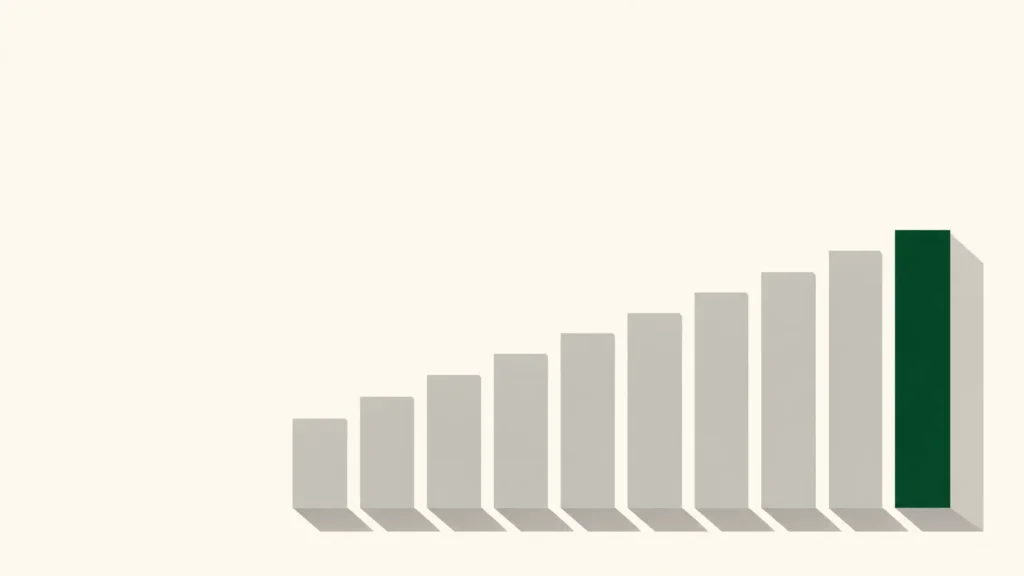
The steps add up. Firms with at least 50 staff had to reach 4 per cent by the end of 2023, The National reported in October 2025. They then had to reach 8 per cent by the end of 2025. So the 2026 increase takes them to 10 per cent by the end of this year.
The base matters too. The half-yearly rule counts Emiratis in skilled jobs, not the whole headcount, according to Gulf News’s account of the ministry rules.
Who has to meet the Emiratisation target?
Private companies with 50 or more employees, according to Gulf News and Khaleej Times reporting in 2026. That is the group the 1 per cent half-yearly rule covers.
Smaller firms are not always exempt, though. Some firms with 20 to 49 staff have faced separate rules in earlier years. FOUAE examined them in its piece on Emiratisation for smaller companies. The 2026 sources FOUAE checked did not restate those rules, so firms in that group should confirm their position with the ministry.
Sector rules can add detail. For example, private healthcare firms with 50 or more staff must split their 2 per cent in two, Gulf News reported in June 2026. Half goes to specialised healthcare roles and half to other skilled jobs. The ministry will assess that rule from 2027.
What happens if you miss the Emiratisation target?
You pay a contribution. From 1 July 2026, firms that missed the first-half target owe a contribution of AED 10,000 a month for each role not filled by a citizen. Khaleej Times reported the rate in June 2026. That adds up to AED 120,000 a year per role.
The year-end deadline works the same way. When firms missed the 2025 target, fines began on 1 January 2026, The National reported. On FOUAE’s reading, a shortfall at the end of 2026 would follow the same pattern from 1 January 2027. However, FOUAE has not seen a ministry statement on how it will charge a year-end 2026 gap.
The FOUAE calculation: the cost of a two-person gap
Take a company with 150 skilled roles. At 10 per cent, it needs 15 Emiratis in skilled jobs by the end of 2026. FOUAE uses whole positions here, because the sources do not explain how the ministry rounds part-roles.
Now suppose the firm has 13. If the ministry charged the gap at the 2026 rate, two unfilled roles would cost AED 20,000 a month, or AED 240,000 a year, on FOUAE’s arithmetic. Both roles use the same rate over the same twelve months.
By contrast, a firm on target pays nothing. It may also join the Emiratisation Partners Club. Members get discounts of up to 80 per cent on selected ministry fees, Khaleej Times reported in July 2026.
How many companies are meeting the target?
Most of them. In the first half of 2026, 95 per cent of companies covered by the policy met their targets. Khaleej Times reported the figure on 21 July 2026, citing WAM. More than 190,000 Emiratis now work in the private sector, at nearly 32,000 companies, the same report said.
That compares with more than 152,000 Emiratis at 29,000 companies in October 2025, according to The National. On FOUAE’s arithmetic, that is about 38,000 more Emiratis in roughly nine months. Still, the two reports may use slightly different bases.
Why fake Emiratisation is the bigger risk
Shortcuts cost more than the contribution. Reporting the ministry’s June 2026 warning, Khaleej Times described fake Emiratisation schemes as a serious labour market violation. In practice, that covers schemes such as listing Emiratis in roles they do not really hold.
The penalties are heavy. Fines range from AED 20,000 to AED 100,000 per case, The National reported in October 2025. Serious cases may also go to prosecutors. Firms can also drop to the lowest band of the ministry’s classification system. Meanwhile, the ministry detected 405 cases in the first half of 2025, the same report said.
What founders should do before 31 December
First, count skilled roles and Emirati staff on the same date, so the gap is clear. Then use the ministry’s Nafis platform, which holds a database of Emirati jobseekers, Khaleej Times reported. FOUAE’s guide to Nafis salary support explains the programme.
Hiring takes time, so the calendar matters. A role posted in late December rarely closes before the deadline. For a wider view, FOUAE has argued that founders gain by treating Emiratisation as a talent strategy rather than a tax.
Verdict: the Emiratisation target is now a 10 per cent test
The Emiratisation target for 2026 brings larger private firms to 10 per cent by year-end, as The National reported. The rule is simple, and 95 per cent of firms met the first half, according to WAM. Still, each missing role costs AED 120,000 a year at the 2026 rate, while fake hiring carries far heavier penalties.
Frequently Asked Questions
Companies with 50 or more employees must raise Emiratis in skilled jobs by 1 per cent in each half of 2026. That brings the cumulative Emiratisation target to 10 per cent by year-end, The National reported.
From 1 July 2026, firms that missed the first-half target owe AED 10,000 a month for each unfilled role, Khaleej Times reported. That totals AED 120,000 a year per role.
The half-yearly rule applies to firms with 50 or more staff. Some firms with 20 to 49 staff have faced separate rules in earlier years. However, the 2026 sources FOUAE checked did not restate them, so these firms should confirm with the ministry.
Sources
Gulf News reported the half-yearly rule in May 2026. In June 2026, it also covered the new healthcare split. Khaleej Times reported the AED 10,000 monthly contribution and the ministry’s warning on fake schemes in June 2026.
Khaleej Times carried WAM’s first-half results on 21 July 2026. The National set out the cumulative targets, the 2025 figures and the fake Emiratisation penalties in October 2025.
Founders of UAE (FOUAE) is an independent, digital-first business publication covering the founders, companies and economy of the United Arab Emirates. Follow FOUAE on Instagram and LinkedIn.