- What happened to the UAE stock market in 2026?
- Why did trading volumes rise while prices fell?
- How have Dubai and Abu Dhabi shares performed since the war?
- Why is JPMorgan bullish on the UAE stock market again?
- What are the UAE stock market timings?
- What should founders and investors take from this?
- Verdict: a cheaper UAE stock market with a clear risk
- Frequently Asked Questions
- Sources
Data note: FOUAE (Founders of UAE) built this UAE stock market analysis on exchange data and reports published up to 18 November 2026. Nothing here is investment advice.
The UAE stock market’s Dubai exchange traded more in 2026 even as prices fell. On the Dubai Financial Market (DFM), traded value rose 22 per cent to Dh162 billion in the first nine months of 2026, Khaleej Times reported. Yet the DFM General Index had lost 1.4 per cent for the year by end-September.
In short
- First, the war closed both UAE exchanges for two days in March 2026, and prices have not fully recovered.
- However, Dubai’s trading value, investor base and institutional share all rose in the first nine months.
- Meanwhile, Abu Dhabi shares traded at 16.3 times trailing earnings in mid-November, down from 19.6 times at end-2025.
What happened to the UAE stock market in 2026?
The year split in two. In 2025, the DFM General Index rose 17.2 per cent, the Dubai Media Office reported in January 2026. The DFM added 97,394 new investors that year, and 84 per cent of them were foreign.
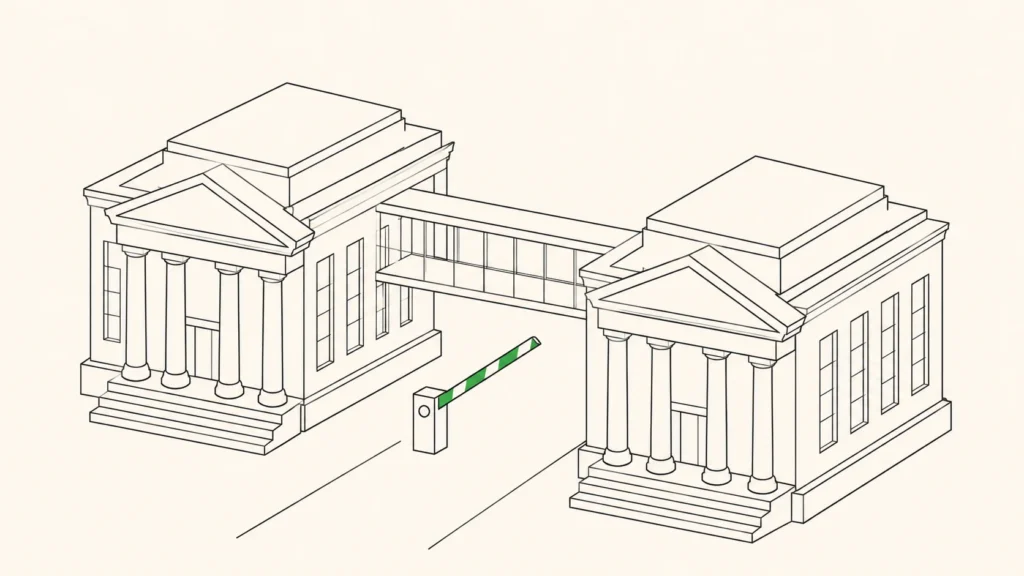
Then the war arrived. The UAE’s markets regulator suspended trading on the DFM and the Abu Dhabi Securities Exchange (ADX) on 2 and 3 March 2026. It called the move a precautionary measure amid Iran’s strikes on the UAE, The National reported.
When trading resumed on 4 March, the DFM closed 4.71 per cent lower. The ADX fell more than 3 per cent during the day and closed 1.9 per cent down, the paper said. Bloomberg called it the biggest slump in Dubai stocks since 2022.
Why did trading volumes rise while prices fell?
Because a falling market is still a busy one. From January to September 2026, DFM’s average daily traded value rose 25 per cent to Dh883 million, Khaleej Times reported on 29 October. The number of trades rose 24 per cent to 3.16 million.
In addition, new money kept arriving. Some 55,460 new investors joined the DFM in the first nine months, and 72 per cent of them were international, the paper said. The investor base now tops 1.3 million.
Who did the trading matters, too. Institutions made up 73 per cent of DFM traded value in the nine months, up from 70 per cent a year earlier, Khaleej Times reported. Meanwhile, foreign investors accounted for 51 per cent of activity. That matches their 2025 share, according to the Dubai Media Office.
What does that tell investors?
On FOUAE’s reading, it points to repositioning rather than flight. Sellers who wanted out still found buyers. Therefore the market kept working through the shock, even while it repriced. Market value held steady, too: DFM capitalisation stood at Dh993 billion at end-September, roughly unchanged from a year earlier.
How have Dubai and Abu Dhabi shares performed since the war?
The recovery has moved in fits and starts. The ADX rose for four months in a row up to September, Enterprise reported on 18 November. Dubai’s index also gained in August and September. Then October hit both.
The ADX fell 6 per cent in October, its worst month since March. The DFM slipped 3.2 per cent in the same month, according to Enterprise. By mid-November, the ADX had lost 5.3 per cent for the year.
Now combine the DFM’s 1.4 per cent fall to September with October’s 3.2 per cent drop. On FOUAE’s arithmetic, that leaves Dubai’s index roughly 4.6 per cent lower for 2026 at the end of October. That is an estimate from two separate figures, not an exchange number.
The wider economy explains part of the caution. In October, the IMF projected that UAE real GDP would shrink 3.9 per cent in 2026. It then expects a 7.7 per cent rebound in 2027, as FOUAE covered in its UAE GDP forecast analysis.
Why is JPMorgan bullish on the UAE stock market again?
JPMorgan has upgraded MSCI UAE to overweight from neutral, Enterprise reported on 18 November, citing Reuters. The bank pointed to positive earnings revisions, valuations with upside and returning foreign inflows.
Its core argument is about stability, not peace. The current “no war / no peace” state is “good enough for the UAE economy to keep growing”, JPMorgan said, according to Enterprise. It also expects UAE stocks to outperform the rest of its emerging Europe, Middle East and Africa universe. In other words, the bank does not need a final settlement to see value.
The FOUAE calculation: how much cheaper Abu Dhabi shares are
At the end of 2025, ADX shares traded at 19.6 times trailing earnings. By mid-November 2026, that had fallen to 16.3 times, Enterprise reported.
On FOUAE’s arithmetic, an investor now pays about AED 16.30 for every AED 1 of yearly company earnings, down from AED 19.60. That makes the market about 17 per cent cheaper on this measure. Both figures cover the same index and use trailing earnings, so the comparison is like for like.
However, cheaper is not the same as safe. A lower multiple can also mean investors expect weaker profits ahead.
What are the UAE stock market timings?
Both exchanges have traded from 10am to 3pm, Monday to Friday, since 3 January 2022. The DFM announced that schedule in December 2021, when the UAE changed its weekend. The ADX kept the same hours, Khaleej Times reported.
However, those announcements are almost five years old. So check the DFM and ADX websites for current session times and holiday closures before placing an order.
What should founders and investors take from this?
For founders, the main lesson is that the listing door stays open. Trading value grew 22 per cent and the DFM investor base passed 1.3 million in 2026, Khaleej Times reported. On FOUAE’s reading, a well-priced listing can still find buyers, and FOUAE’s look at the DIP Holding IPO shows what investors weigh.
For investors, by contrast, the trade-off is sharper. Valuations are lower, but the risk is political, so a renewed escalation could close the market again. Borrowing costs matter too, as FOUAE’s look at the UAE interest rate explains.
Similarly, newcomers should keep it simple. On FOUAE’s reading, spreading money across sectors limits the damage if one stock falls hard.
Verdict: a cheaper UAE stock market with a clear risk
The UAE stock market spent 2026 repricing, not shutting down. Dubai’s trading value and investor base grew, while prices fell and Abu Dhabi valuations dropped about 17 per cent on FOUAE’s arithmetic. JPMorgan sees value in that gap. The open question is the war, and no earnings forecast can price that risk fully.
Frequently Asked Questions
Is the UAE stock market down in 2026?
Yes. The ADX had lost 5.3 per cent for the year by mid-November, Enterprise reported. Meanwhile, the DFM General Index had lost 1.4 per cent by end-September, according to Khaleej Times. It then fell 3.2 per cent in October.
What time does the UAE stock market open?
Both the DFM and ADX have traded from 10am to 3pm, Monday to Friday, since 3 January 2022. Check the exchange websites for current session times.
Why did the UAE stock market close in March 2026?
The regulator suspended trading on 2 and 3 March 2026 as a precaution after Iran’s strikes on the UAE, The National reported. Trading resumed on 4 March.
Sources
The National reported the March 2026 suspension and the 4 March reopening. Bloomberg reported the scale of the Dubai sell-off on the same day.
Khaleej Times reported DFM’s nine-month 2026 trading data on 29 October 2026. Enterprise reported JPMorgan’s upgrade, citing Reuters, and the October index moves on 18 November 2026. Dubai Media Office published DFM’s 2025 results in January 2026 and the trading hours in December 2021.
Founders of UAE (FOUAE) is an independent, digital-first business publication covering the founders, companies and economy of the United Arab Emirates. Follow FOUAE on Instagram and LinkedIn.