From $500 in Uzbekistan to a 725-Metre Tower on Sheikh Zayed Road
In early 2025, construction began on a 725-metre tower on Dubai’s Sheikh Zayed Road. When it opens in 2028, the Burj Azizi will be the second-tallest building on Earth, just 103 metres below the Burj Khalifa.
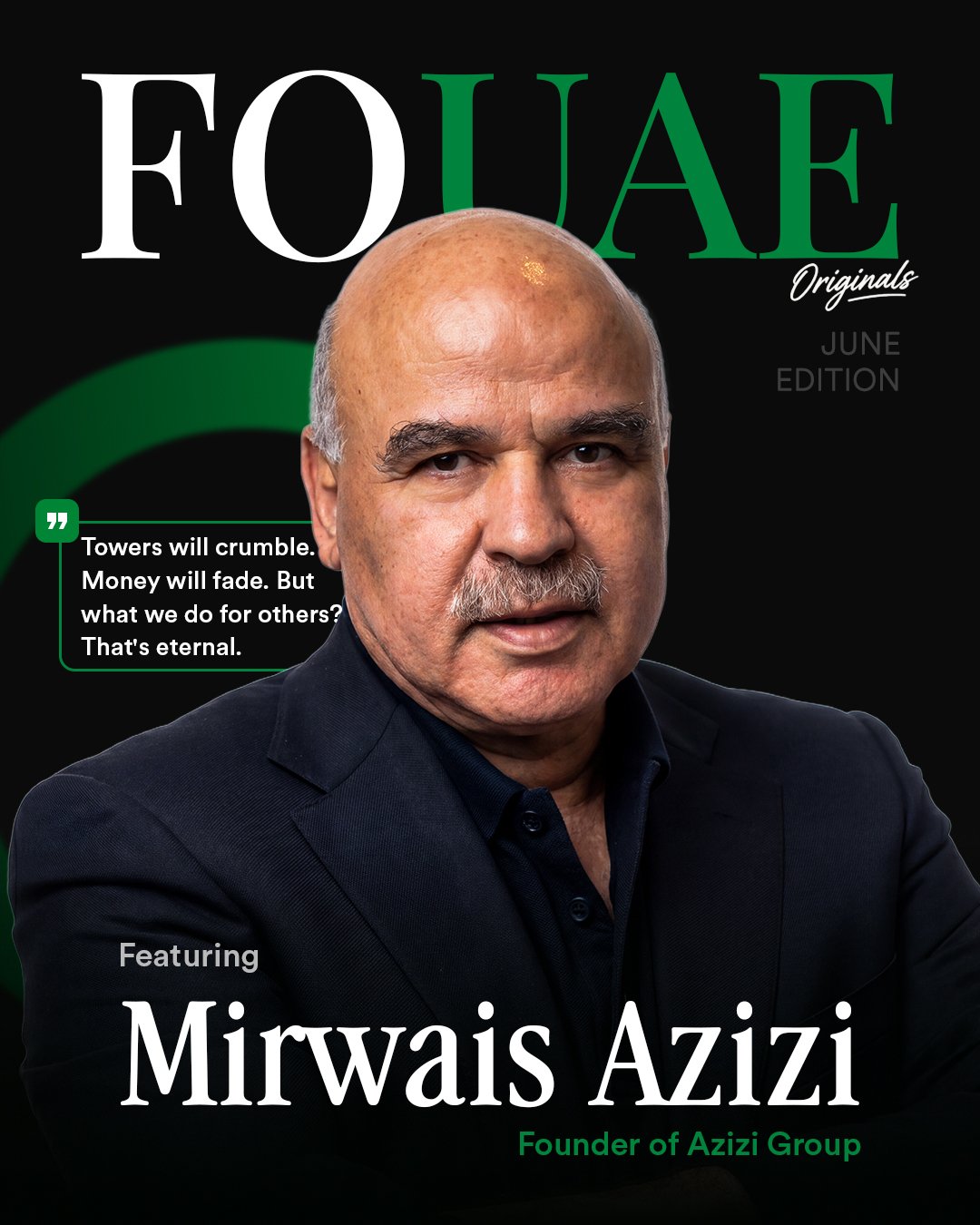
The man behind it is named Mirwais Azizi. In March 2026, Forbes named him the first billionaire from Afghanistan in the history of its World Billionaires List.
Thirty-seven years before that announcement, in 1988, he walked across the border from Afghanistan into Uzbekistan carrying USD 700 and four young children. By the time he reached the other side, he had USD 500 left.
This is the story of what he did with it.
Kabul, 1988
Mirwais Azizi was born in 1962 in Laghman Province, Afghanistan, and grew up in Kabul. He studied law at Kabul University and worked at a law firm in the city through the mid-1980s.
By 1988, the Soviet-Afghan war had been grinding through the country for nearly a decade. Around one in five Afghans fled during this period. Azizi was one of them. He took his wife Parigul and his young children and crossed north into Uzbekistan, leaving behind his country, his profession, and almost everything he owned.
He had a friend in Uzbekistan, a fellow Afghan working in the textile trade. Azizi’s plan was simple. Borrow USD 5,000 from the friend, take the family further west into Europe, and start over.
The friend listened. Then he made a counter-offer that would change Azizi’s life.
“I Could Give You $50,000”
The friend’s reply, in Azizi’s own retelling years later: “Lending you $5,000 is not the issue. I could give you $50,000. But I want to help you start a business.”
Instead of cash, the friend handed Azizi two containers of textiles worth around USD 25,000 and told him to sell them over three months and pay him back. Azizi accepted. He set up an office in Tashkent. He had two employees: a driver named Sergei and an accountant named Baser. He worked the post-Soviet textile market with everything a former lawyer carries: precision, contracts, and a memory for detail.
His own account of what happened next is almost embarrassing to quote.
“In the first six months, I made $1 million. In the six months after that, I made $7 million. It’s like magic, huh?”
It wasn’t magic. It was a 500 per cent markup on textiles imported from South Korea into a region that had just lost its central planner. In 1989, with that capital, Azizi formally founded the Azizi Group.
From Cigarettes to Skyscrapers
The textile trade was a launching pad. Azizi moved into cigarettes, becoming an official dealer for Bulgarian-made brands across the Russian Commonwealth, then in 1994 the official importer of Winston and Magna. At his peak in this period, he ran offices in more than 20 countries.
Then he discovered Dubai.
In 2006, Azizi founded Azizi Bank in Kabul with USD 7.5 million in equity capital. Within years, it had grown into Afghanistan’s largest commercial financial institution. He later acquired Bakhtar Bank and rebranded it as the Islamic Bank of Afghanistan.
In 2007, he bought his first plot of land in Dubai. Azizi Developments was born. By 2008, the company had sold around AED 1 billion of off-plan units in Al Furjan, mostly to families paying in instalments for apartments that did not yet exist.
Then Lehman Brothers fell.
The Customer He Couldn’t Find
In 2008 and 2009, Dubai’s property market collapsed. Off-plan buyers who had committed to monthly payments simply stopped paying. Many developers in the city pocketed the deposits as forfeitures. The contracts allowed it. The market expected it.
Azizi instructed his team to return every single deposit.
The detail that makes the story remarkable is the one he tells himself, in his own voice: “The majority of buyers could not continue payments and all of them were handed back their deposits, except for one client who until today we have not been able to reach.”
One customer. That is the only outstanding deposit. Azizi Developments still has the money, ready to be returned, almost two decades later, waiting for someone to walk in.
The decision cost him a fortune. He went five quiet years between 2008 and 2013 with very little to show in Dubai. But it earned him something the balance sheet does not measure. When construction restarted in 2013, the buyers came back. So did hundreds more. By March 2025, Azizi Developments had delivered over 40,000 units across 137 buildings, with another 150,000 under construction. Its Dubai portfolio is valued north of AED 45 billion. The company is now one of the largest private developers in the city.
The Tower
In September 2024, Azizi confirmed the height of Burj Azizi. Seven hundred and twenty-five metres. A seven-star hotel inspired by seven cultures. A vertical mall across seven floors. The world’s highest hotel lobby, nightclub, restaurant, and observation deck. AED 6 billion in investment. Completion 2028.
It is, by some measures, the most ambitious single building any private developer has ever attempted in Dubai. It is rising on Sheikh Zayed Road, less than two kilometres from the Burj Khalifa.
The Lesson
It would be easy to package this as a parable about resilience. The lawyer with $500. The refugee with no country. The tower in the sky.
All of that is true. But it understates the actual lesson.
Empires are not built by founders who refuse to fall. Every developer in Dubai fell in 2008. Azizi fell harder than most because he had sold AED 1 billion of off-plan inventory and suddenly had no customers to deliver to.
Empires are built by founders who know what to do after they fall. Azizi gave back the money. He sat out five years. He kept the trust intact. He waited.
When the market came back, he had the only thing that mattered in 2013. A clean reputation in a city where almost nobody else still had one.
The lawyer who walked into Uzbekistan with $500 was not magic. The man putting up the world’s second-tallest tower is not magic either. He understood, very early in his life, what an empire actually rests on.
Trust takes years to build. Five minutes to lose. And one returned deposit, sometimes, to keep.