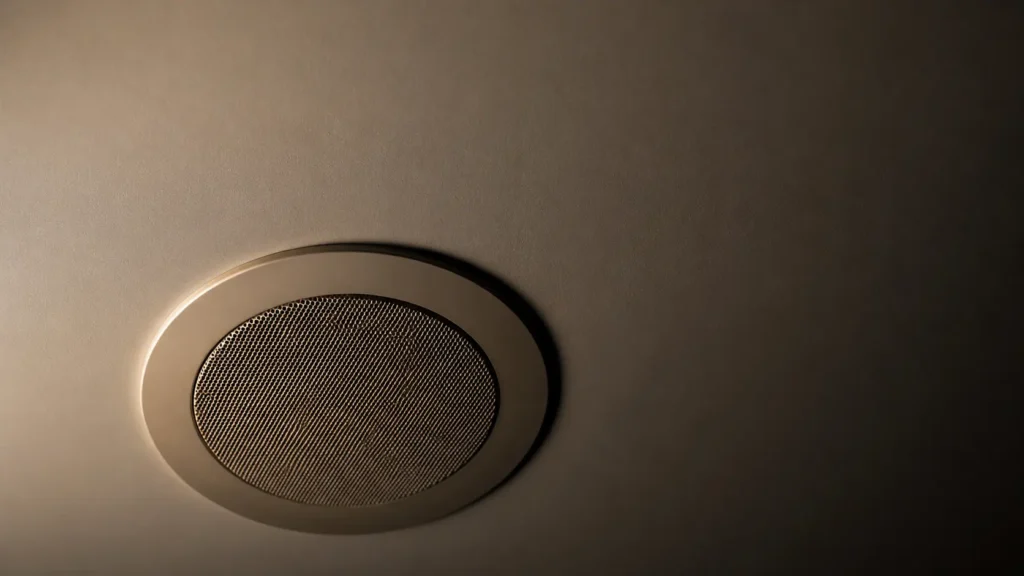
From 1 December 2026, the background music playing in your restaurant becomes a licensed activity. UAE music licensing now requires an annual permit for any establishment using copyrighted music commercially, with reported fee ceilings reaching AED 50,000 for shopping malls and AED 45,000 for airlines.
Most owners will discover this in December. The ones who read the framework now will have three months to work out what they actually owe, and to whom.
What the UAE music licensing guide actually says
The Ministry of Economy and Tourism published the Collective Management in Music Guide under Ministerial Resolution No. 136 of 2026. Abdulla bin Touq Al Marri, Minister of Economy and Tourism, framed it as building an integrated governance framework for copyright and neighbouring rights.
Licences run for one year and renew annually. Fees scale with the nature of the music use and the size of the economic activity. A neighbourhood café and a regional mall will not pay the same.
Who falls inside the scope
The list is broader than most coverage suggests. Restaurants and cafés, shopping malls, fitness centres, hotels and floating hotels, airlines, radio stations, television channels, concerts and similar events all sit within UAE music licensing.
Read that list against your own operation. A gym running class playlists qualifies. So does a salon playing music all day, a hotel lobby, and an events company using recorded tracks at a corporate function.
Who is exempt
Educational and academic institutions, government entities, national events and personal celebrations of a non-commercial nature fall outside the framework. The Ministry can add further exemptions through later decisions.
Notice what is missing. UAE music licensing contains no small business carve-out, so a single-site café carries the same obligation as a chain, even where the fee scales differently.
The UAE music licensing detail nobody is discussing
Here is where UAE music licensing gets more complicated than the headlines allow.
The Ministry authorised two collecting organisations, not one. The Emirates Music Rights Association received its licence in April 2025, and Music Nation followed in June 2025. Both collect fees and distribute royalties on behalf of composers, songwriters, singers, instrumentalists, record producers and music publishers.
Why two is an unusual choice
Most countries run a single collecting society per rights category. The United Kingdom has PRS. Germany has GEMA. One body, one licence, one invoice.
Two authorised organisations raise an obvious question. Do they represent the same repertoire, or different ones? If different, a business playing an international playlist may need agreements with both, because one catalogue’s licence cannot cover music it does not represent.
The question to ask before December
Ask each organisation which repertoire it controls, and get the answer in writing.
That single question decides whether UAE music licensing costs you one fee or two. Nobody has published a clear answer, and individual tariff schedules were not fully released at the time of writing. Consequently the most useful thing an operator can do this month is make contact rather than wait for an invoice.
The Spotify problem sitting underneath
There is a related exposure that predates this framework entirely, and it catches a remarkable number of UAE businesses.
Consumer music subscriptions prohibit commercial use in their terms of service. A café playing music through a personal Spotify or Apple Music account has been in breach for years, regardless of any local licensing regime.
Commercial background music services exist precisely for this, and they usually bundle certain rights. However bundled rights vary by territory. A service that satisfies European rules may not resolve UAE obligations. Check what your provider actually covers here rather than assuming coverage travels.
Where the money goes
Ten percent of collected fees flows into a new Cultural Support Fund in the Field of Music, overseen jointly by the Ministry of Economy and Tourism and the Ministry of Culture, with a separate bank account and a joint committee.
The fund supports composition, production, distribution and live performance.
Why the fund matters more than the fee
This is the part worth thinking about strategically. A country cannot build a music industry without functioning rights collection, because artists will not create commercially where they cannot be paid.
So UAE music licensing works less as a revenue measure than as plumbing. It creates the mechanism through which musicians earn here, which is the precondition for the creator economy ambitions the country keeps announcing. Cafés are simply where the pipe starts.
What UAE music licensing costs a real business
Put numbers around it before deciding how worried to be.
A single-site café will presumably sit near the bottom of the scale rather than anywhere near the AED 50,000 mall ceiling. Against rent, salaries and a licence renewal, an annual music fee is unlikely to change anyone’s viability.
The risk is not the amount. It is the surprise, the administrative time, and enforcement against businesses that ignored a requirement they never knew existed. That pattern should feel familiar to anyone who has watched compliance obligations accumulate across the past three years.
What to do before UAE music licensing begins
Four steps, and the whole thing takes an afternoon.
Confirm whether you are in scope. If music plays anywhere customers can hear it, assume yes.
Contact both organisations. Ask about repertoire coverage and request an indicative fee for your category and size.
Audit your current music source. If it runs through a personal streaming account, that needs replacing whatever the licensing outcome.
Budget it for 2027. Treat this as a recurring line rather than a one-off, because the licence renews annually.
One further point for multi-site operators. Ask whether licensing applies per venue or per company, since the answer changes the arithmetic entirely for anyone running six cafés rather than one. A per-site model turns a modest fee into a meaningful annual cost, and that distinction is worth establishing before you sign anything.
The honest summary
UAE music licensing is a small cost wrapped in an unclear process, arriving on a fixed date.
The framework itself reads as reasonable and overdue. Copyright law already required permission for commercial use, and this standardises how permission gets bought. What remains unresolved is whether businesses need one licence or two, and how much either costs.
Ask the question in September. Discovering the answer in December is how a manageable fee turns into an unmanageable afternoon.
Frequently Asked Questions
The framework takes effect on 1 December 2026 under Ministerial Resolution No. 136 of 2026, issued by the Ministry of Economy and Tourism. Licences are valid for one year and can be renewed annually thereafter.
Restaurants, cafés, shopping malls, fitness centres, hotels, floating hotels, airlines, radio stations, television channels and concert organisers all fall within scope. Educational institutions, government entities and non-commercial personal celebrations are exempt.
Fees vary by the nature of the music use and the size of the establishment. Reported ceilings reach AED 50,000 for shopping malls and AED 45,000 for airlines. Full tariff schedules for smaller venues had not been widely published at the time of writing.
The Ministry authorised two organisations: the Emirates Music Rights Association, licensed in April 2025, and Music Nation, licensed in June 2025. Both collect fees and distribute royalties to composers, performers, producers and publishers.
Sources
Sources: UAE Ministry of Economy and Tourism, Collective Management in Music Guide, Ministerial Resolution No. 136 of 2026, August 2026; Gulf News, UAE Introduces New Music Licensing Fees, What Restaurants, Hotels and Malls Need to Know, August 2026; Emirates 24|7, UAE’s New Music Licensing Rules, Who Needs to Pay and How Much, August 2026; Gulf Today, UAE to Charge Fees From Cafes, Restaurants and Malls for Playing Music From December, August 2026; Arabian Post, UAE Sets December Start for Commercial Music Fees, August 2026; Entrepreneur Middle East, Two UAE Regulations SMEs Should Have on Their Radar, August 2026; TBreak, UAE Music Licensing Fees Begin in December, Who Pays, Who’s Exempt, August 2026.
Founders of UAE (FOUAE) is an independent, digital-first business publication covering the founders, companies and economy of the United Arab Emirates. Follow FOUAE on Instagram and LinkedIn.