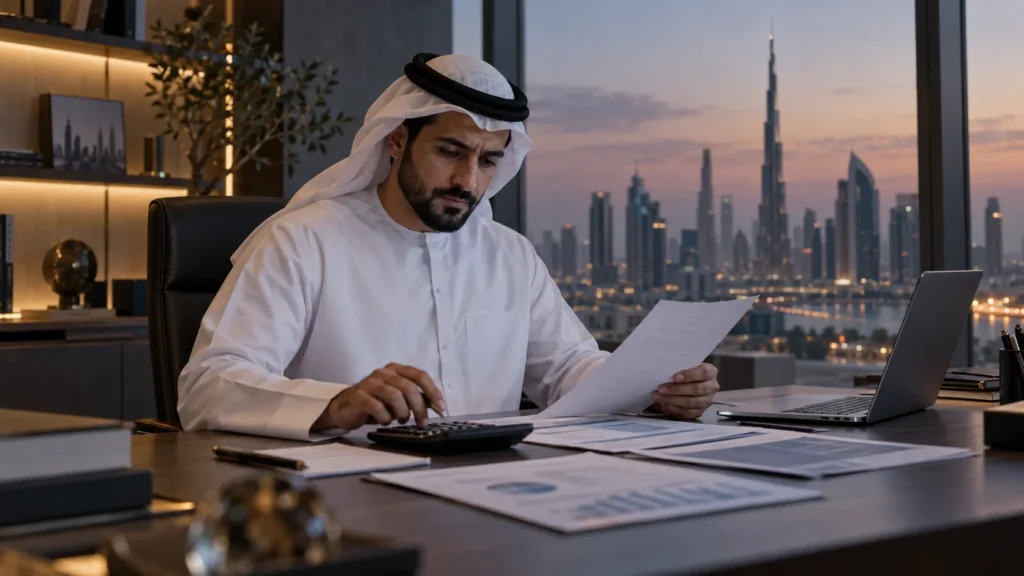
Somewhere in Dubai right now, a YouTuber with millions of followers is registering a company, hiring an editor, and applying for a ten-year residence visa. Multiply that by thousands, and you have one of the more overlooked economic shifts happening in the region. While much of the world still treats content creators as a novelty, a lifestyle, or at best a marketing channel, Dubai has quietly reached a different conclusion. It has decided the creator economy is a genuine industry, and it is building the infrastructure to become its global capital.
This is not a story about influencers posing by hotel pools, though there is plenty of that. It is a story about a city applying the same playbook it used for finance, trade and logistics to a new and fast-growing sector, and doing so with the seriousness of an industrial strategy.
The scale of the commitment
The numbers explain why Dubai is taking this seriously. The UAE’s creator and influencer market is estimated to be worth around 1.2 billion dollars, and it is growing at roughly 27 percent a year through the end of the decade. More than 11,000 social-media influencers now operate under formal licenses in the country. These are not fringe figures. They point to an industry large enough, and growing fast enough, to be worth building a strategy around.
And Dubai has built one. The city launched Creator HQ, an initiative backed by the Dubai Media Council and the Dubai Digital Media Academy, and reportedly supported with around 40 million dollars in funding, to serve as a base and support system for global creators. It created a dedicated Golden Visa pathway specifically for content creators, and Creator HQ has struck partnerships with the platforms that matter most, including Meta, TikTok and X, giving resident creators access to platform insights, financing and support. The scale of ambition was on full display at the Billion Followers Summit, which expected 5,000 attendees in its 2025 edition and drew 30,000, featured hundreds of speakers, and distributed some 13.6 million dollars to creators through a pitch competition for viable business ideas. This is government-scale commitment, not a passing marketing campaign.
Why creators are moving
The pull is easy to understand once you look at the economics. A successful creator earning millions from global brand deals and platform revenue faces one enormous variable that Dubai neutralises: tax. The UAE levies zero personal income tax, which means a creator relocating from a high-tax country can keep effectively all of their earnings. For a top creator, that single fact can be worth more than any brand deal they will sign this year.
Around that core advantage, Dubai has wrapped an ecosystem. Creators get 100 percent ownership of their businesses, the ability to sponsor visas for their families, and a choice of long-term residency options, from the Golden Visa to the Green Visa to the Digital Nomad Visa, several of which require only 90 days of physical presence a year to maintain tax residency. Add the global connectivity, the central time zone that bridges Asia, Europe and the Americas, the safety, the lifestyle, and the growing concentration of other creators, brands and platform representatives all in one place, and Dubai offers something no rival quite matches: the money advantage plus the ecosystem to use it.
The real insight: formalising the hustle
Here is the part that most coverage misses, and it is the most important. Dubai’s genuine innovation is not the tax rate, which other places also offer. It is the formalisation of the creator economy, turning what has everywhere else been a precarious individual hustle into a licensed, bankable, legally recognised business.
The regulatory framework makes this concrete. To operate legally, a creator needs a trade or media license, and from early 2026, anyone publishing paid or even barter-based promotional content must hold an Advertiser Permit from the UAE Media Council. Crucially, there is no minimum follower threshold. It is commercial intent, not audience size, that triggers the requirement, which means the rules treat a creator as a business from the very first sponsored post. Non-compliance carries real consequences, with penalties reported as high as 500,000 dirhams under federal media law.
At first glance this looks like red tape, and creators arriving from lighter-touch markets sometimes read it that way. But the effect is precisely the opposite of a burden. Formalisation is what solves the problems that plague creators everywhere else: it gives them a legal entity that banks will actually serve, a clear tax status, professional credibility when negotiating with brands and agencies, and the ability to build equity in a recognised business rather than an unincorporated personal brand. Dubai is doing for creators exactly what it did for finance and trade, building the regulated rails that let an informal activity mature into a scalable industry. The license is not the obstacle. It is the foundation.
From individuals to businesses
That foundation enables the shift that defines the modern creator economy: the move from lone individuals to real companies. A licensed creator in Dubai is no longer just a person with a phone and an audience. They are a business that can hire editors, managers and producers, sponsor employee visas, open corporate bank accounts, launch product lines, and diversify revenue across brand deals, their own products, licensing and outside ventures.
This is the maturation the whole industry has been moving toward, and Dubai has positioned itself to host not only the creators but the entire supporting industry that grows up around them. Talent management agencies, production studios, creator-focused banking and financing, analytics and software tools, brand-collaboration marketplaces, merchandise and licensing operations, education, and events all cluster where the creators cluster. By concentrating the talent, Dubai concentrates the demand for everything the talent needs.
The opportunity for founders
For a founder audience, this reframes the whole subject, and it is worth being direct about it. The opportunity in Dubai’s creator economy is not only, or even mainly, to become a creator. It is to build the businesses that serve them.
As Dubai draws in the world’s creators, it draws in a concentrated, well-funded, tax-advantaged customer base with specific and growing needs: management and representation, production and post-production, financial services built for irregular creator income, technology for scheduling, analytics and monetisation, marketplaces that connect creators to brands, and the commerce infrastructure to turn audiences into product sales. This is the classic picks-and-shovels position. In a gold rush, some of the most durable fortunes are made not by the miners but by the people selling them the tools. Dubai has assembled the miners. The founders who build the tools have a rare, concentrated market to sell into.
The honest caveats
A clear-eyed account has to include the complications, because they are real. The licensing regime, while a genuine benefit, is also a genuine obligation, and the fines for operating without the right permits are significant enough that no serious creator or creator-services business can treat compliance as optional. Market saturation is a second reality: as thousands of creators concentrate in one city, visibility becomes harder to win, and the economics of the creator economy remain steeply top-heavy, with a large share of the money flowing to a small share of the talent. A big following is not the same as a durable business, and the creators who thrive over time are the ones who build diversified, professionally run, properly licensed operations rather than relying on virality.
There is also the matter of content itself. The UAE governs media content within its own cultural and legal framework, which differs in meaningful ways from the norms of many creators’ home markets. A creator relocating to Dubai operates within those boundaries, and that is a real consideration that anyone building a content business here needs to understand and respect from the outset rather than discover later.
The takeaway
Dubai has recognised something most governments have been slow to grasp: the creator economy is not a fad or a marketing footnote. It is a large, fast-growing global industry, and every industry eventually acquires a capital, a place where the talent, the capital and the supporting businesses concentrate. Dubai intends to be that place, and it is pursuing the goal with a coherence that is easy to underestimate, combining zero personal tax, fast and affordable licensing, dedicated residency pathways, government-backed institutions like Creator HQ, and a formalisation framework that quietly upgrades influencing from a hustle into a real business.
For creators, the pitch is close to unbeatable: keep your earnings, build a proper company, and base yourself in one of the world’s most connected cities. But for the founders in FOUAE’s audience, the more interesting opportunity may lie one step back from the camera, in building the services, technology and infrastructure that a maturing creator industry cannot function without. The creator economy is growing up, moving from bedrooms and ring lights into companies, teams and balance sheets. Dubai has decided to be the city where that growing up happens, and it is building, licence by licence and visa by visa, the capital of an industry most people still do not take seriously enough.
Sources: PBL Legal, Dubai: The Ultimate Hub for the Global Creator Economy, February 2026; Stratrich, Creator HQ Dubai, November 2025; Dubai South Business Hub, Influencer License Dubai and UAE Regulations for Social Media Creators, 2026; Shuraa, Influencer License Dubai 2026; Shams Free Zone, Content Creator License in UAE 2026 Guide; UAE Media Council and National Media Council licensing rules; Zami Tours, Dubai 2026 Creator License Guide.