- The Dubai economic model going into the war
- Stress point one in the Dubai economic model: tourism
- Stress point two: the Strait the Dubai economic model runs through
- Stress point three: safe haven as a product feature
- Stress point four: SME liquidity
- What held in the Dubai economic model
- What the Dubai economic model does next
- Frequently Asked Questions
- Sources
Every crisis is diagnostic. Five weeks of conflict between February and April 2026 gave the Dubai economic model a stress test that three decades of growth had never demanded, and it produced something prosperity cannot: an honest map of where the structure is thin.
This is not an argument that Dubai is broken. The ceasefire held, recovery is running, and the structural advantages survived. It is an argument that four specific vulnerabilities became visible, and that naming them precisely beats either dismissing or catastrophising them.
The Dubai economic model going into the war
Context first, because the fall only means something against the starting point.
Dubai welcomed a record 19.59 million international visitors in 2025, with average hotel occupancy at 80.7 percent across 154,264 rooms. Property transactions reached roughly AED 917 billion, per Dubai Land Department data. Foreign direct investment ran at record levels, and every major indicator pointed up.
Then five weeks of conflict delivered the assessment that five record years had not.
Stress point one in the Dubai economic model: tourism
Tourism is the most visible pillar of the Dubai economic model. Scale is exactly what made it exposed.
HVS hospitality analysis recorded cancellations running near 60 percent within 48 hours of the first strikes. Occupancy fell from 84.8 percent across January and February to 22.8 percent in the week ending 14 March 2026. The WTTC put regional losses around $600 million a day.
Why the engine stalled so fast
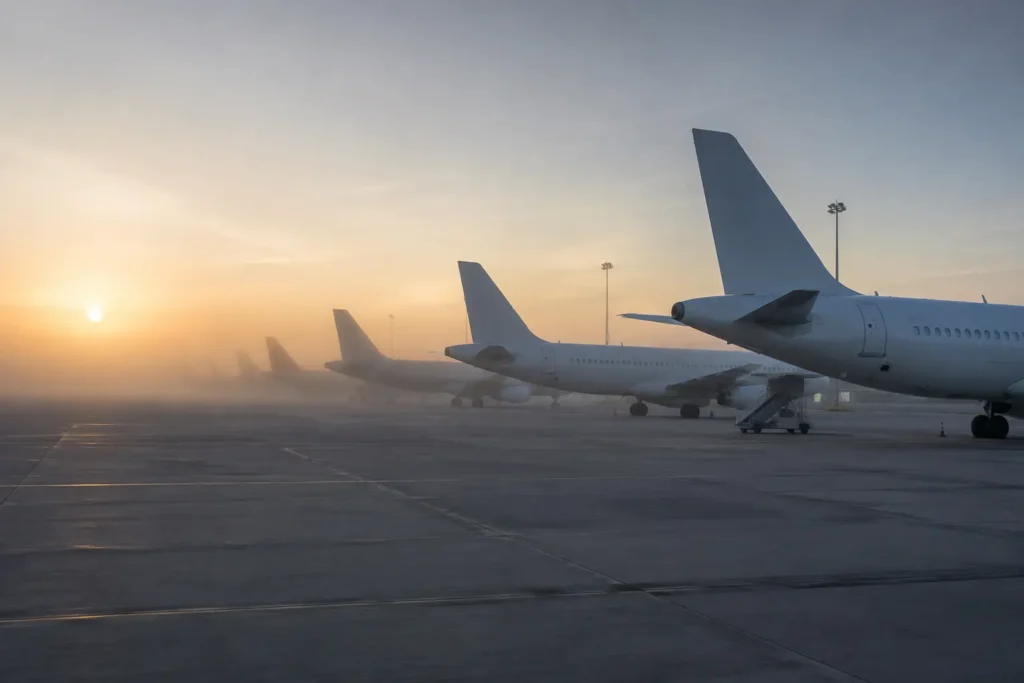
The sector depends on international arrivals through a single airport corridor. Airspace disruption and confidence damage then arrived together. Both inputs failed at once, so no partial capacity remained to fall back on.
The fix is not a smaller tourism sector. Instead the Dubai economic model needs hedging: an events calendar locking commitments months ahead, a deeper resident leisure economy, and faster demand-side activation when aviation stumbles. The recovery now underway tests whether those lessons stick.
Stress point two: the Strait the Dubai economic model runs through
This is the largest single dependency in the Dubai economic model, and the numbers are striking.
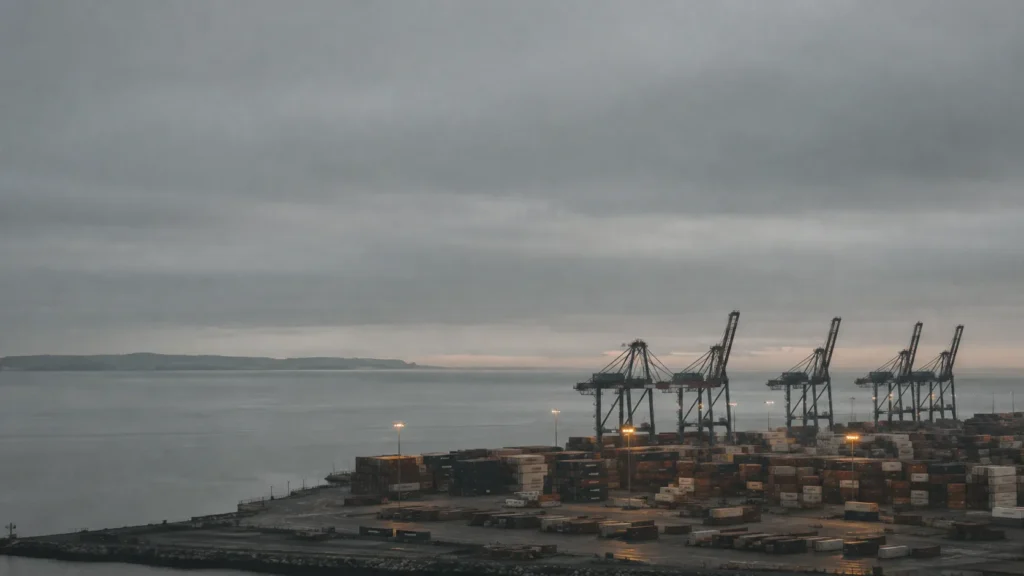
Jafza and Jebel Ali Port together account for 36 percent of Dubai’s GDP, according to Dubai Media Office figures published in May 2025. The free zone hosts more than 11,000 companies from 157 countries, generated AED 713 billion in trade during 2024, and supports over 160,000 jobs directly.
Every one of those dependencies runs through the same waterway. When Iran moved to throttle the Strait, Jebel Ali operations paused, Brent briefly touched about $119.50 a barrel on 9 March 2026, and freight costs escalated. Companies rerouted through Fujairah and Khor Fakkan where infrastructure allowed.
The problem a reopened Strait does not solve
The Print identified the real risk in June 2026, noting that “once supply chains move, they rarely come back”.
That is the asymmetry. Disruption is temporary, yet rerouting decisions are close to permanent. A company that has qualified an alternative route has already paid the switching cost. So if even a fraction of those 11,000 firms accelerate that work, Jebel Ali’s position shifts in ways a ceasefire cannot reverse.
What Dubai can build is resilience architecture: genuine alternative capacity at Fujairah, the Etihad Rail corridor as a land option, and bonded logistics that reduce reliance on sea passage for time-critical goods.
Stress point three: safe haven as a product feature
Dubai sold globally mobile capital a specific promise. Unlike other regional centres, safety here could be assumed rather than priced.
Mohamed Bahaa, managing director of APCO in Dubai, argued that the sense of security which drew professionals to the Gulf has been broken. The word doing the work is sense. It was never purely rational, and it did not need to be.
Why a ceasefire cannot restore it
Belief built over decades of visible stability cannot be reinstated by an announcement. Interception performance during the conflict was highly effective, and deploying it at scale in full view of residents and global media is precisely what altered the psychological contract.
Rebuilding requires sustained, verifiable stability over years, long enough to restore the assumption of safety rather than merely the fact of it. No incentive package shortens that timetable, which makes this the slowest repair in the Dubai economic model.
Stress point four: SME liquidity
The Central Bank’s five-pillar financial institution resilience package, launched on 17 March 2026, was an emergency intervention rather than a precaution.
The Bank released regulatory capital buffers normally held for turbulence, prevented banks from reclassifying affected loans as non-performing, and expanded SME hardship support system-wide. Scale and speed like that reveal what sat underneath.
Weight without depth in the Dubai economic model
SMEs contribute roughly 63.5 percent of the non-oil economy and employ about 86 percent of the private sector workforce. Their aggregate weight is enormous. Their individual liquidity buffers, tested properly for the first time, proved thin.
The conflict did not create this. It exposed how quickly thin buffers become existential when revenue stops without warning, which is why the businesses that held were overwhelmingly those carrying three to six months of cash.
What held in the Dubai economic model
Diagnostic value comes from the passes as much as the failures.
The banking system needed intervention, yet it did not break. Digital infrastructure, government services and the courts ran throughout, and none of that was guaranteed. DIFC registered companies and processed transactions without interruption, and construction continued in most areas.
Analysis from the Middle East Institute at the National University of Singapore identified the distinguishing factor. The UAE entered the conflict with real diversification already operational, and non-oil sectors represent roughly 77 percent of national GDP. A more hydrocarbon-dependent economy would have faced collapse in government and private revenue at the same time. Dubai absorbed the shock at the private sector level, while Abu Dhabi’s sovereign reserves supplied the fiscal floor.
What the Dubai economic model does next
None of these four problems is fast to solve, and none is unsolvable either.
Tourism concentration yields to resident economy development. Strait dependency yields partially to alternative port and rail investment. The safe-haven question yields only to time. SME fragility yields to better credit infrastructure and fintech lending. Each repair sits within reach of the Dubai economic model as it stands.
The Dubai economic model came through this with its architecture intact and its blind spots documented. That combination is more useful than another record year would have been, because prosperity hides exactly the things a stress test surfaces. Anyone assessing the emirate now should read this alongside what actually changed and what did not.
Frequently Asked Questions
Jafza and Jebel Ali Port together account for approximately 36 percent of Dubai’s GDP, according to Dubai Media Office figures from May 2025. The free zone hosts more than 11,000 companies and supports over 160,000 direct jobs.
HVS recorded cancellations near 60 percent within 48 hours. Occupancy fell from 84.8 percent across January and February 2026 to 22.8 percent in the week ending 14 March, before recovering after the April ceasefire.
What did the UAE Central Bank do to protect SMEs?
It launched a five-pillar resilience package on 17 March 2026, releasing regulatory capital buffers, preventing banks from reclassifying affected loans as non-performing, and expanding hardship support across the banking system.
Concentration risk through the Strait of Hormuz is the largest single dependency, given that Jafza and Jebel Ali Port generate around 36 percent of GDP. Tourism concentration and thin SME liquidity buffers rank next.
Sources
Sources: Dubai Media Office, Hamdan bin Mohammed Highlights Jafza’s Contribution to Dubai’s Economy, May 2025; DP World, Jafza Turns 40 With Record $190bn in Trade, May 2025; HVS, Shock, Divergence and Recovery in GCC Hospitality, May 2026; The Print, Is Dubai Losing Its Middle East Mojo, June 2026; MEI Perspectives Series 57, National University of Singapore, GCC Vision Plans Post-War, 2026; Dubai Department of Economy and Tourism, 2025 Tourism Performance Data, February 2026; Gulf News, UAE Relief Measures, 2026; The Conversation, Economic Impact of the Iran War on Gulf States, May 2026; Stimson Center, Iran Conflict Hits the Foundations of Gulf Economies, 2026; WTTC, Gulf Tourism Loss Estimates, 2026.
Founders of UAE (FOUAE) is an independent, digital-first business publication covering the founders, companies and economy of the United Arab Emirates. Follow FOUAE on Instagram and LinkedIn.