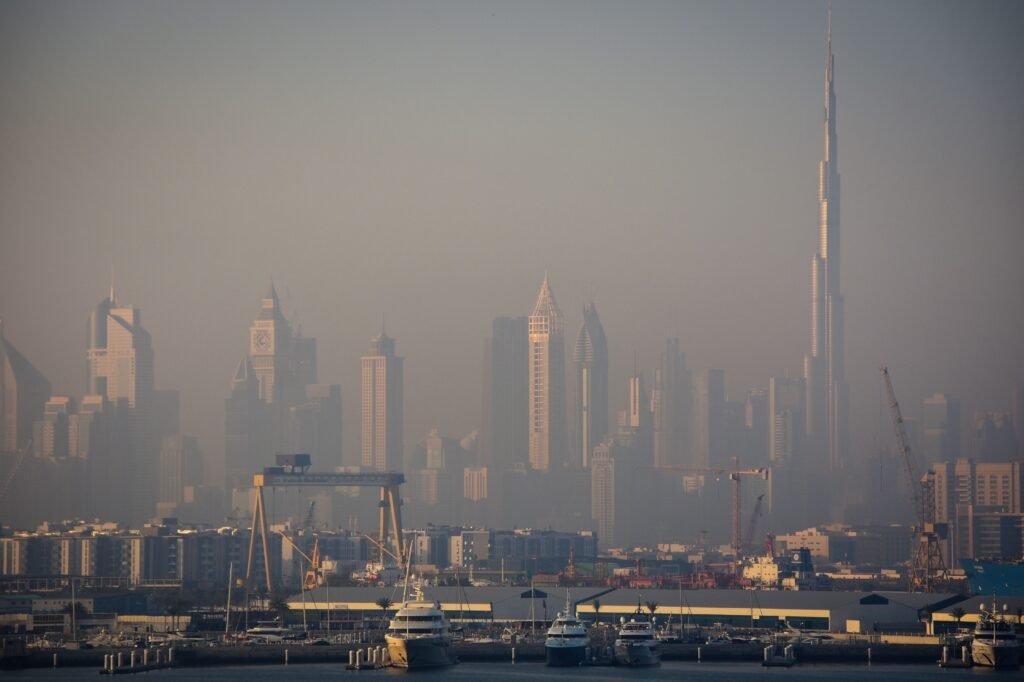
- Three crises that tested a business hub
- Why the Dubai business hub argument turns on mobility
- Four variables that decide whether a business hub holds
- How the Dubai business hub scores
- Where the Dubai business hub case genuinely differs
- What founders should take from the Dubai business hub test
- The verdict on the Dubai business hub
- Frequently Asked Questions
Every major commercial city eventually faces a shock that raises the same question. Can it keep its position once the danger passes? Three historical answers give the Dubai business hub debate of 2026 a framework built on evidence rather than sentiment.
The short version: ecosystems move far more slowly than capital does. That single asymmetry explains most of what follows, and it sets the terms for any Dubai business hub forecast.
Three crises that tested a business hub
Forecasters wrote off each of these cities. None of them left, and the reasons transfer directly to the Dubai business hub question.
What New York shows about ecosystem depth
The New York Stock Exchange closed for four days after 11 September 2001, its longest suspension since 1933. Lower Manhattan’s economy contracted at an annualised rate of about 15 percent in the following quarter, and the city shed roughly 125,000 jobs in the closing months of that year, per the New York City Comptroller’s 2002 assessment.
Physical destruction on that scale should have emptied the district. Instead, many displaced firms rebuilt within lower Manhattan itself. Relationships, not real estate, held them there.
Singapore after SARS
SARS reached Singapore in 2003, and visitor arrivals collapsed by roughly two-thirds during April and May. Hotel occupancy in the luxury segment fell close to zero. Full-year GDP growth flattened.
Yet arrivals rebounded about 76 percent from the April trough by June, and the Ministry of Trade and Industry recorded 2004 growth of 9.2 percent.
London after Brexit
The 2016 referendum posed the hardest test, because the disadvantage was permanent rather than temporary. Forecasts ran to 30,000 lost financial services roles from Bruegel, and former London Stock Exchange chief Xavier Rolet suggested the figure could reach 232,000.
By October 2020, EY’s Brexit Tracker counted roughly 7,500 relocated jobs. London ceded the top Global Financial Centres Index position to New York, then held second place.
Why the Dubai business hub argument turns on mobility
Here is the correction that most Brexit commentary gets wrong, and it matters for the Dubai business hub argument.
Assets did leave London. EY tracked about £1.2 trillion of assets shifting to the European Union by late 2020, and New Financial put bank assets at roughly £900 billion, around a tenth of the UK banking system.
So the money was portable. The people were not. Roughly 7,500 staff moved out of a UK financial workforce of some 2.2 million, against forecasts up to thirty times larger.
Why the split happens
Legal entities relocate with a filing. Balance sheets relocate with a booking decision. Neither requires anyone to change where they live, who they know, or which courts they trust.
Relationships, tacit expertise and institutional memory behave differently. They accumulate slowly in one place and reconstruct expensively somewhere else. Consequently a shock can move enormous sums without moving the ecosystem that generated them.
Four variables that decide whether a business hub holds
The three cases produce a usable test.
Are the structural advantages intact? New York’s ecosystem depth survived 2001. Singapore’s geography and institutions survived SARS. London’s legal infrastructure survived Brexit, although market access narrowed.
Is the government response fast and specific? Singapore’s Tourism Board launched targeted campaigns within weeks, published containment data and screened arrivals. Speed compressed the recovery timeline more than fundamentals did.
How deep are the embedded relationships? New York’s took a century, London’s three centuries.
Does a credible substitute exist? In all three cases it did not. No European city held the counterparty depth to absorb London’s activity.
How the Dubai business hub scores
Applying the same four tests to 2026 produces a clear reading on three, and an honest complication on the fourth.
On structure, nothing moved. Corporate tax stayed at 9 percent, full foreign ownership rules held, the DIFC legal framework continued, and the Golden Visa kept issuing. Geography between Europe, Africa and South Asia obviously did not change.
On government response, the Central Bank launched a five-pillar financial resilience package within days, followed by an AED 1 billion business support package on 30 March 2026. That is Singapore-speed rather than post-crisis drift.
On relational depth, the Dubai business hub is younger than its comparators, roughly two decades old. Even so, DIFC closed 2025 with 8,844 active companies and 50,200 financial services professionals, including regional headquarters for more than 290 banks and capital markets institutions.
Does a substitute for the Dubai business hub exist?
Riyadh is building quickly and competing hard, particularly for regional headquarters mandates. Singapore serves a different geography. Neither currently replicates the full combination of tax treatment, common law courts, connectivity and MENA access in one place.
Where the Dubai business hub case genuinely differs
The precedents share a feature Dubai does not, and pretending otherwise would be dishonest analysis.
New York does not sit beside a state capable of reaching its infrastructure. Singapore’s threat was biological and containable. London’s was regulatory and self-inflicted. Dubai sits across a narrow waterway from Iran, which demonstrated in February 2026 that it could reach the emirate’s airport, port and landmarks.
That is a different category of risk. A safe-haven proposition built partly on distance from regional conflict has now been tested in a way none of the three comparators experienced.
Holding both readings at once
The framework says the Dubai business hub retains its position, because the structural case held, the response was fast, and no substitute is ready.
The geography says one dimension of the proposition needs rebuilding, and that rebuilding takes longer than a market rebound. Both statements are true, and serious investors hold them together rather than choosing the more comfortable one. The stress points the war exposed deserve the same treatment.
What founders should take from the Dubai business hub test
Three practical conclusions follow.
First, distinguish between what a shock damages and what it merely frightens. Sentiment repriced within days of the April ceasefire, while nothing structural had changed in the interim.
Second, treat your position inside the Dubai business hub as a real asset. Ecosystem depth belongs on your own balance sheet. The relationships your business has built in Dubai are precisely the thing that does not relocate cheaply, which is why they hold value through disruption.
Third, price the residual risk honestly rather than dismissing it. Geographic exposure is now a live variable in this market, and the comparison with Abu Dhabi is one reasonable response to it.
The verdict on the Dubai business hub
History gives a consistent answer. Hubs lose assets during crises and keep ecosystems, because assets travel and ecosystems do not.
On that measure the Dubai business hub sits in a strong position, with intact fundamentals, a fast government response, and no ready alternative. The qualification is real but narrow: proximity is now priced, and it was not before.
So the Dubai business hub faces a smaller problem than the crash forecasts suggested, and a larger one than the recovery headlines imply.
Frequently Asked Questions
Some functions did. EY’s Brexit Tracker counted around 7,500 relocated financial services jobs by October 2020, alongside roughly £1.2 trillion in assets. That job figure sits far below early forecasts, which ranged from 30,000 to 232,000 roles.
Visitor arrivals rebounded about 76 percent from their April 2003 trough by June that year, helped by fast government communication and arrival screening. Singapore’s Ministry of Trade and Industry later recorded 9.2 percent GDP growth in 2004.
DIFC ended 2025 with 8,844 active registered companies and 50,200 financial services professionals, including 1,052 regulated firms. More than 290 banks and capital markets institutions run regional headquarters from the centre.
The Central Bank launched a five-pillar financial resilience package within days of the conflict beginning. Dubai followed with an AED 1 billion business support package on 30 March 2026, alongside fee deferrals and regulatory easing measures.
Sources: Federal Reserve Bank of New York, Liberty Street Economics, Lower Manhattan Since 9/11, October 2016; Office of the New York City Comptroller, Fiscal Impact of 9/11 on New York City, 2002; Singapore Ministry of Trade and Industry, Macroeconomic Review, April 2004; Pacific Asia Travel Association, Singapore SARS Recovery Case Study; EY, Financial Services Brexit Tracker, October 2020, via Reuters and the Irish Times; New Financial, Brexit and the City Report, April 2021; Bruegel, Brexit and Financial Services Relocation Estimates, 2018; Z/Yen, Global Financial Centres Index, 2017 to 2026; DIFC, Landmark Annual Results for 2025, February 2026; Gulf News, UAE Central Bank Five-Pillar Financial Resilience Package, March 2026; AGBI, Dubai Market Recovery Coverage, April 2026.
Founders of UAE (FOUAE) is an independent, digital-first business publication covering the founders, companies and economy of the United Arab Emirates. Follow FOUAE on Instagram and LinkedIn.