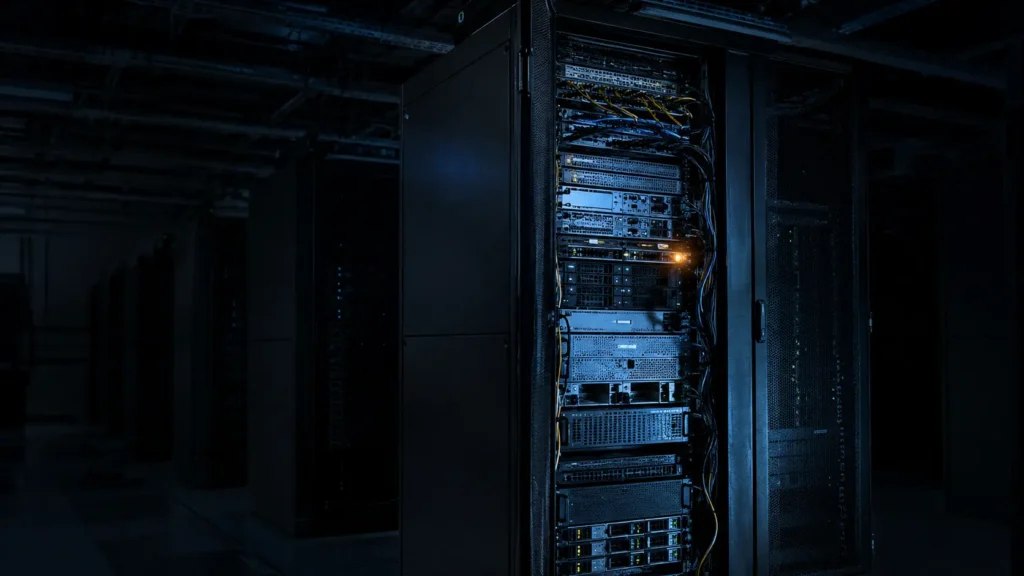
On 10 July 2026 the US Commerce Department moved the UAE into Country Group A:5, the tier reserved for its closest allies. Headlines called it a breakthrough for UAE AI chips. The rule itself is narrower than that, and the gap between the headline and the text is where the commercial opportunity sits.
License-free access applies only to entities named on a new government list. Everyone else still needs a licence, exactly as before.
What actually changed for UAE AI chips
The Bureau of Industry and Security removed the UAE from Country Groups D:3 and D:4, classifications it shared with Yemen and Libya, and added it to A:5. The Final Rule took effect immediately.
A:5 contains NATO members and America’s closest partners. One detail makes the UAE’s inclusion remarkable. It is the only country in that group that does not belong to the multilateral export control regimes. Israel and Saudi Arabia sit outside A:5 entirely.
The list that governs UAE AI chips
Here is the clause the headlines skipped. License-free treatment for UAE AI chips applies only where the ultimate consignee and every end user appears in the new Supplement No. 8 to Part 740.
Not just the buyer. Every end user in the chain.
Who can actually buy UAE AI chips license-free
Supplement No. 8 covers UAE government entities, including the Ministry of Defence and Armed Forces, plus approved commercial entities.
On the Emirati side that means G42 and Core42. On the American side it covers Amazon, Apple, Google, Meta, Microsoft, OpenAI, Oracle and xAI operating in the UAE.
What that leaves for everyone else
If your company is not on Supplement No. 8, the licence requirement continues to apply in full. BIS said so explicitly, and Latham and Watkins put it plainly in its client alert: the country group upgrade does not by itself free up AI chip exports.
So for a Dubai fintech or an Abu Dhabi health startup, access to UAE AI chips has not improved by one transaction. The tier changed. Their position did not.
The two-tier UAE AI chips market this creates
This is the part worth thinking about commercially rather than politically.
The rule creates a small group able to import frontier compute without friction, and a very large group that cannot. That asymmetry has to resolve somewhere. It resolves through intermediation.
Why G42 becomes the gatekeeper
A company holding license-free access to Nvidia Blackwell and AMD Instinct hardware can sell capacity to companies that do not. Core42 already runs sovereign cloud services, and demand for UAE AI chips from unlisted firms now has exactly one convenient domestic route.
Consequently the $30 billion Abu Dhabi compute buildout acquires a captive customer base by regulation rather than by competition. That was not the stated purpose. It is the predictable effect.
The route most founders will actually use
There is an important nuance here, and it softens the picture considerably.
Amazon, Google, Microsoft and Oracle all appear on Supplement No. 8 for their UAE operations. A startup renting capacity from a hyperscaler’s local region therefore sits downstream of license-free hardware without needing any listing of its own.
So the practical path to frontier compute runs through cloud contracts rather than through import paperwork. Very few companies were ever going to buy racks directly, which is why the rule matters more for capacity availability than for procurement.
What founders should do about UAE AI chips
Three practical responses follow.
Price sovereign cloud against international alternatives before assuming local is cheaper, because scarcity rarely produces discounts. Ask providers whether their capacity sits under Supplement No. 8, since that decides whether their supply is secure or licence-dependent. Then treat UAE AI chips access as a supplier-concentration risk in board reporting, exactly as you would a single-source component.
The bargain being completed
My earlier reading of the Abu Dhabi buildout was that the UAE had exchanged a degree of technological sovereignty for chip access. The July rule completes that exchange, and the terms are now visible.
Washington gains a Gulf partner increasingly central to its Iran strategy, alongside revenue for American technology firms. Abu Dhabi gains frontier silicon and the fastest route to a working AI industry.
The condition attached to UAE AI chips
Nothing here is unconditional. Congressional scrutiny continues over the risk of diversion to China, and the licence requirement remains fully in place for every entity outside Supplement No. 8.
Therefore access to UAE AI chips is now a listed privilege rather than a national right. Lists can be extended, and lists can be shortened. A business building on the assumption of permanent access is making a political forecast, whether or not it thinks of it that way.
What else the UAE AI chips rule quietly did
Two provisions deserve attention beyond the semiconductor story.
The rule removes certain licence requirements tied to missiles, rocket systems and unmanned aerial vehicles. It also expands licence exceptions for chemical and biological controlled items. Beyond UAE AI chips, it opens license-free paths for commercial satellites, spacecraft, oil and gas equipment and civil nuclear power generation.
The CFIUS change founders should note
The Final Rule also reduces certain mandatory filing obligations under the Committee on Foreign Investment in the United States.
That matters well beyond UAE AI chips. Emirati capital acquiring stakes in American companies now faces a lighter mandatory-filing regime in defined circumstances, which lowers friction on cross-border deals that previously stalled in review.
The wider signal for the region
Consider what this says about how Washington now allocates technology access.
Saudi Arabia and Israel both sit outside A:5, and the UAE joined despite not belonging to the multilateral export control regimes that every other member has signed. Access followed a bilateral relationship rather than a rules-based qualification.
That has consequences for founders weighing where to build across the Gulf. Compute availability is no longer a function of geography or wealth. It follows diplomatic standing, which can move in either direction and rarely announces itself in advance.
The honest reading on UAE AI chips
Treat this as an infrastructure decision, not a market opening.
The UAE now sits inside the trusted tier. That is a genuine diplomatic achievement and a real accelerant for the Stargate campus. For the hundreds of thousands of companies registered here and absent from Supplement No. 8, UAE AI chips simply became easier to buy domestically and no easier to import directly.
That is still an improvement. It is simply a different improvement from the one the headlines described, and knowing which one you got determines how you plan for 2027.
Frequently Asked Questions
Only entities listed in Supplement No. 8 to Part 740, such as G42 and Core42, receive license-free access. Every other UAE company still requires an export licence, exactly as it did before the July 2026 rule change.
A:5 is the least restricted classification under the US Export Administration Regulations, containing NATO members and closest allies. The UAE is the only member that does not belong to the multilateral export control regimes.
UAE government entities including the Ministry of Defence, plus G42 and Core42. American firms covered include Amazon, Apple, Google, Meta, Microsoft, OpenAI, Oracle and xAI operating within the country.
Yes. It eased licence requirements on missiles, rockets and unmanned aerial vehicles, expanded exceptions for chemical and biological controlled items, opened paths for commercial satellites and civil nuclear equipment, and reduced certain mandatory CFIUS filing obligations.
Sources
Sources: US Department of Commerce, Bureau of Industry and Security Final Rule, Federal Register, July 2026; Reuters, US Makes It Easier to Export Nvidia AI Chips and Military Equipment to the UAE, July 2026; Bloomberg, US Eases Export Rules on UAE Allowing AI Chip Sales From Nvidia and AMD, July 2026; Latham and Watkins, US Eases Export Controls for the UAE, Four Key Takeaways, August 2026; Morrison Foerster, US-UAE Cooperation Deepens as BIS Eases Export Control Restrictions, July 2026; AGBI, UAE in AI Chips Breakthrough as US Ends Curb on Exports, July 2026.
Founders of UAE (FOUAE) is an independent, digital-first business publication covering the founders, companies and economy of the United Arab Emirates. Follow FOUAE on Instagram and LinkedIn.