- A Counterintuitive Milestone
- The Problem Being Solved
- The Four Pillars of the Diversification System
- The Sectors That Diversification Built
- The Two Emirate Model: A Structural Asset
- The Honest Accounting: What Has Not Yet Been Solved
- What Other Countries Can Learn: The Transferable Principles
- The Deepest Lesson
How the UAE built one of the world’s most deliberately engineered business environments, and what other nations can learn from the decisions that made it possible.
A Counterintuitive Milestone
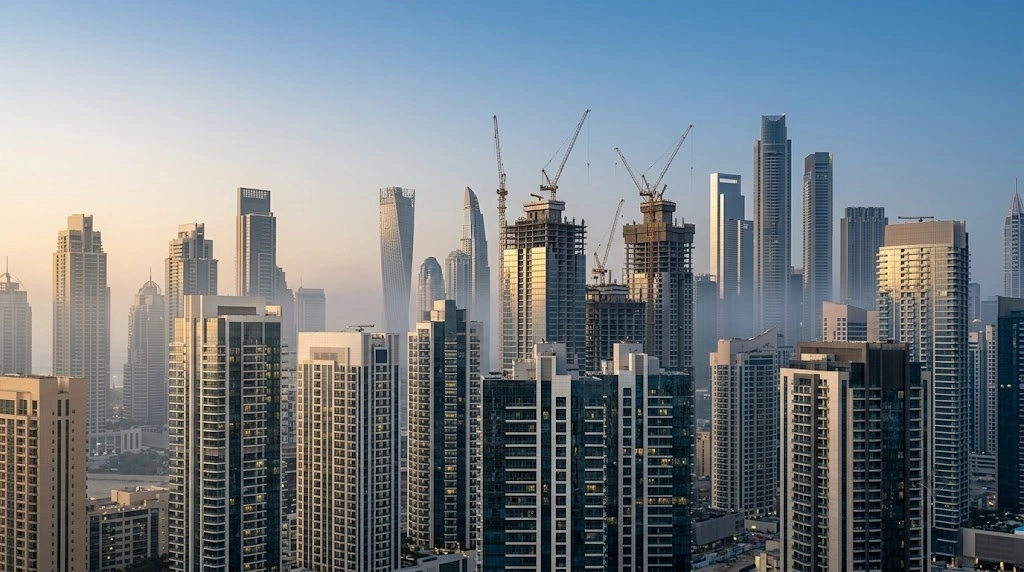
In the first quarter of 2025, the UAE’s Federal Competitiveness and Statistics Centre announced that the non-oil sector had contributed 77.3% of total GDP, a record high in the nation’s history. The UAE’s Minister of Economy, Abdullah bin Touq Al Marri, described it as reflecting “the strong momentum of economic diversification” and the effectiveness of a “knowledge- and innovation-based economic model.”
That statistic inverts a relationship most people still assume to be the defining feature of Gulf economies. The United Arab Emirates, a federation formed in 1971 on the back of oil discoveries, now generates more than three-quarters of its economic output from sectors that have nothing to do with hydrocarbons. By 2024, the country attracted $45.6 billion in foreign direct investment, a 48% year-on-year increase, making it the 10th largest FDI recipient globally, and the second largest by number of newly announced greenfield projects, behind only the United States. Tourism contributed $70.1 billion to GDP. The DIFC ranked 7th in the Global Financial Centres Index, its highest position ever. Non-oil foreign trade reached $816.7 billion, growing at more than seven times the global rate.
None of this happened by accident, and very little of it happened quickly. What the UAE executed over the past three decades is one of the most consequential deliberate economic transformations in modern history, achieved not through crisis or necessity alone, but through a distinctive brand of top-down strategic design applied with unusual consistency and patience.
Understanding the mechanisms behind that transformation is where the real analytical value lies. The numbers are the outcome. The decisions are the lesson.
The Problem Being Solved
The starting point for understanding UAE economic strategy is an honest assessment of what the country feared. Oil is finite. Oil prices are volatile. An economy built on a single extractable commodity accumulates institutional dependencies, behavioural patterns, and political incentives that make change progressively harder over time. The resource curse, the phenomenon by which hydrocarbon wealth suppresses institutional development and crowds out productive private sector activity, has been well documented across Nigeria, Venezuela, Libya, and dozens of other petrostates.
The UAE’s leadership read that evidence and chose a different trajectory before the pressures of oil depletion made change unavoidable. That timing distinction is essential. Diversifying from a position of strength, when oil revenues are still flowing and fiscal space exists, is fundamentally different from diversifying under duress. It allows investment in long-horizon infrastructure without immediate returns, patient capacity building in sectors that take decades to mature, and the absorption of short-term costs that come with regulatory reform and institutional disruption.
The strategic logic was explicit: use today’s oil wealth to build tomorrow’s non-oil competitiveness. This is not a unique idea. What made the UAE different was the precision with which it translated that logic into sequential, compounding policy decisions across four decades.
The Four Pillars of the Diversification System
The UAE did not diversify through a single initiative or master plan. It built a diversification system, a set of interlocking decisions that reinforced one another over time. Four pillars define the architecture of that system.
Pillar One: Physical Infrastructure as a Business Model
The first and most foundational decision the UAE made was to treat world-class physical infrastructure not as a public good but as a competitive product. Jebel Ali Port, which opened in 1979 and was built to a scale that seemed wildly disproportionate to the UAE’s economy at the time, exemplifies this logic. By 2024, Jebel Ali handled 15.5 million TEUs of cargo, its highest volume since 2015 and equivalent to 18% of DP World’s total global throughput. By the analysis of the Boston Consulting Group, the port and the adjacent Jebel Ali Free Zone together contribute approximately 33% of Dubai’s GDP and support roughly 450,000 jobs. What began as an act of ambitious infrastructure faith became the backbone of one of the world’s most important logistics corridors.
The same logic produced Dubai International Airport, which handled 92.3 million passengers in 2024 to retain its position as the world’s busiest international airport, and Emirates airline, founded in 1985 with two aircraft and a $10 million government grant, which now operates one of the world’s largest long-haul networks. These were not infrastructure investments in the conventional sense. They were strategic assets designed to make every other form of economic activity cheaper, faster, and more globally connected.
The analytical insight here is that infrastructure decisions have a multiplier effect that plays out over decades. Countries that build port capacity, airport connectivity, and power reliability ahead of private sector demand create the conditions for that demand to materialise. Countries that wait for demand to justify infrastructure investment often find themselves permanently one step behind.
Pillar Two: The Free Zone as an Innovation Laboratory
The UAE’s free zone system is its most distinctive policy invention, and the one most frequently mischaracterised. Free zones are commonly described as tax havens, which misses their structural purpose entirely. Tax advantages are the headline feature. The architecture underneath is more sophisticated.
The UAE operates more than 45 free zones, each designed around a specific sector or economic function. What this architecture does is allow the government to run competitive experiments in regulatory design without dismantling the broader national framework. The DIFC, established in 2004, operates under its own legal system based on English common law, administered by an independent judiciary and regulated by the Dubai Financial Services Authority. This was not a tax policy decision. It was a jurisdictional design decision, an attempt to offer international financial institutions and fintech companies the legal predictability of London or New York inside a market that could access capital flows from Asia, Africa, and Europe simultaneously.
The results are measurable. By full year 2025, DIFC housed 7,700 active companies with a total workforce of 50,200 professionals. Its revenues reached AED 2.13 billion, up 20% year-on-year. It ranked 7th globally in the Global Financial Centres Index, and Dubai was named a top-four global FinTech hub. The top 120 families and high-net-worth individuals in the DIFC ecosystem managed over $1.2 trillion in wealth as of 2024.
The regulatory design principle embedded in the free zone system is replicable in theory but politically difficult in practice: accept short-term legal complexity (multiple jurisdictions operating within a single country) in exchange for the long-term competitive advantage of matching regulatory environments to the specific needs of different industries. Most countries cannot do this because the political cost of perceived regulatory fragmentation is too high. The UAE, operating under a governance model that prioritises economic competitiveness, has been able to sustain it.
Following the introduction of a 9% corporate tax in June 2023, which aligned the UAE with OECD standards and brought the country into the global base erosion framework, the government carefully preserved the free zone proposition through the Qualifying Free Zone Person framework, which maintains a 0% rate on qualifying income for companies genuinely operating within the zones. The 9% tax itself, far from being a blow to competitiveness, was a signal of institutional maturity: the UAE was willing to accept revenue rules from global bodies while protecting its core investment proposition.
Pillar Three: Regulatory Reform as a Foreign Policy Instrument
The most underappreciated dimension of UAE economic strategy is the extent to which regulatory reform has been deployed not primarily as a domestic policy measure but as a tool for attracting external capital and talent.
The abolition of the 51/49 ownership rule in 2021 is the clearest example. For decades, foreign companies establishing mainland businesses in the UAE were required to have a local Emirati partner holding at least 51% of the entity. The rule protected Emirati commercial interests but created significant friction for foreign investors who were reluctant to cede majority control, share proprietary information with a required local partner, or accept the governance complexity of a mandatory joint venture. When the government extended 100% foreign ownership to most commercial and industrial sectors in 2021, it removed a structural deterrent that had quietly capped the country’s attractiveness to sophisticated international companies.
The Golden Visa programme, launched in 2019, applied the same logic to talent. By offering five-to-ten-year renewable residency to investors, entrepreneurs, scientists, and specialised professionals without requiring employer sponsorship, the UAE converted residency from a transactional relationship tied to an employment contract into a commitment relationship tied to an individual’s contribution to the economy. By 2023, approximately 158,000 Golden Visas had been issued. The downstream effects, more stable talent pools, deeper local knowledge accumulation, more entrepreneurial risk-taking by individuals who are not facing visa expiry anxiety, are hard to quantify but structurally significant.
The UAE’s Comprehensive Economic Partnership Agreement programme, launched in 2021, extended this reform logic to trade. In an environment where global trade grew by just 2% in 2024, the UAE’s non-oil foreign trade expanded by 14.6%, reaching $816.7 billion. By mid-2025, the UAE had concluded 28 CEPAs, providing preferential market access to economies representing nearly three billion consumers. The India CEPA, signed in February 2022, produced a 20.5% increase in non-oil bilateral trade in the following period, with UAE exports to India surging 75% by end-2024. The UAE’s stated goal is to reach AED 4 trillion in total foreign trade by 2031, a target it is now on pace to achieve years ahead of schedule.
The CEPAs are more than trade deals. They are instruments of strategic repositioning, designed to make the UAE the lowest-friction switching point between Asian production and Western consumption, between African raw materials and Gulf processing capacity, between South Asian talent and global capital markets. Each agreement adds another node to a network whose value increases non-linearly as the connections accumulate.
Pillar Four: Strategic Vision Documents as Market Signals
The UAE is unusual among nation-states in the degree to which it uses official strategy documents not primarily as internal planning guides but as market signals directed at global investors and talent. The “We the UAE 2031” vision, unveiled in November 2022, commits to doubling GDP from AED 1.49 trillion to AED 3 trillion, growing non-oil exports to AED 800 billion, expanding foreign trade to AED 4 trillion, and raising tourism’s GDP contribution to AED 450 billion. These are not aspirations. They are public commitments with specific numbers and specific timelines, against which the government’s credibility is regularly measured.
The Dubai Economic Agenda D33, a parallel ten-year masterplan, targets AED 32 trillion in cumulative economic activity by 2033 and generates an average of AED 100 billion annually in economic value from digital transformation. The UAE Digital Economy Strategy, launched in 2022, commits to doubling the digital economy’s contribution to GDP from 9.7% to 19.4% within ten years.
The function of these documents is often misunderstood. They are not primarily plans. They are contracts, made publicly, between the government and the market, specifying the conditions the government will work to create in exchange for private investment and talent. When a global technology company is deciding whether to establish a regional headquarters in the UAE, the existence of a clearly articulated, quantified, multi-year policy commitment reduces the uncertainty premium in that decision. The government is signalling not just what it intends to do but what kind of policymaker it commits to be.
The Sectors That Diversification Built
Understanding how the UAE’s economy actually looks after three decades of diversification effort requires moving past the aggregate GDP statistics to examine what the non-oil sectors are actually producing and why they have proven durable.
Trade and logistics remain the largest single contributor to non-oil GDP, accounting for 16.8% of the non-oil economy in 2024. This is not accidental. The UAE sits at the intersection of trade routes connecting Europe, Asia, and Africa. Jebel Ali Port’s AI-equipped “nerve centre” achieved a 25% reduction in crane turn-time and a 32% increase in cargo handling through machine learning optimisation. Dubai ranked fifth globally and first in the Arab world in the 2025 International Shipping Centre Development Index. Logistics is the UAE’s most structurally entrenched non-oil sector: it depends on geography that cannot be replicated and infrastructure investments compounded over four decades.
Financial services and wealth management contribute 13.2% of non-oil GDP and are growing at an accelerating pace. The concentration of sovereign wealth, family office capital, hedge funds, and international banking within the DIFC creates network effects that reinforce the centre’s attractiveness. The Middle East’s largest sovereign wealth funds, including Abu Dhabi Investment Authority and Mubadala, are headquartered nearby, creating a capital density that gives financial service providers immediate access to institutional decision-makers. Dubai’s ranking in the GFCI improved from below the top twenty to seventh globally, and it became one of only nine financial centres classified as having broad and deep capabilities across all evaluated sectors.
Tourism is the UAE’s most visible diversification success. The sector contributed AED 257.3 billion ($70.1 billion) to GDP in 2024, representing 13% of the economy and a 26% increase over 2019 pre-pandemic levels. Dubai received 18.72 million international overnight visitors in 2024, an 8.7% increase from the prior year. International visitor spending reached AED 217.3 billion. The World Travel and Tourism Council projects the UAE’s tourism sector will contribute AED 287.8 billion to GDP by 2035 and support more than one million jobs. What the UAE accomplished in tourism was the conversion of a transit stopover into a destination in its own right, through deliberate investment in events, infrastructure, retail, hospitality, and the curation of an international lifestyle brand that attracts both visitors and permanent residents.
Technology and digital economy represent the fastest-growing frontier. The UAE Digital Economy Strategy targets a contribution of 19.4% of GDP by 2031, up from 9.7% in 2022. PwC Middle East projects AI alone will contribute 14% of UAE GDP by 2030, an economic impact of approximately $320 billion over the next decade. Dubai attracted AED 40.4 billion ($11 billion) in technology-focused FDI in H1 2025, a 62% year-on-year increase, and ranked first globally in project volume across major tech sectors. The country is third globally in AI talent attraction. These are not projections about a distant future. They are measurements of an existing system gaining momentum.
The Two Emirate Model: A Structural Asset
One of the least discussed features of the UAE’s diversification is that it operates as a federation of seven emirates with meaningfully different economic identities, and that difference is a structural strength, not a weakness.
Abu Dhabi holds approximately 90-95% of the UAE’s oil reserves and generates most of the federation’s hydrocarbon revenue. Its sovereign wealth infrastructure, led by ADIA, Mubadala, and ADQ, manages assets that are among the largest in the world. Abu Dhabi’s diversification strategy is anchored in these sovereign vehicles, which have invested globally in technology, healthcare, renewable energy, and industrial sectors while simultaneously funding domestic development priorities like the Khalifa Port expansion, the Barakah Nuclear Energy Plant, and the Hub71 technology ecosystem.
Dubai, by contrast, has functioned as the federation’s commercial laboratory. With limited oil resources of its own, Dubai’s leadership made an earlier and more urgent commitment to non-oil revenue streams. Its airport, port, financial centre, tourism sector, and real estate market are all products of that constraint-driven urgency. Dubai contributes approximately 25% of UAE GDP despite having an economy that is 95% non-oil based.
This structural division of labour, Abu Dhabi providing fiscal stability and long-term investment capital, Dubai providing commercial dynamism and global brand equity, creates a combined offering more resilient than either emirate could provide alone. The federation’s fiscal prudence is anchored in Abu Dhabi’s oil revenues and sovereign buffers, while its global commercial appeal is driven by Dubai’s open, cosmopolitan economic model.
The Honest Accounting: What Has Not Yet Been Solved
An accurate analysis of the UAE’s diversification requires acknowledging the limitations that the most credible external observers consistently identify.
The IMF’s 2025 Article IV consultation noted that while the UAE’s fiscal stance remains prudent and non-oil performance is robust, the fiscal position continues to be sensitive to oil price movements in Abu Dhabi, where hydrocarbon revenues fund a substantial portion of government spending and social infrastructure. The federation’s overall fiscal architecture remains linked to oil in ways that the non-oil GDP statistics do not fully capture.
The private sector’s role in diversification is large in absolute terms but still constrained by the weight of government-related entities in the economy. State-linked enterprises (GREs) dominate construction, hospitality, transport, banking, and telecommunications. True private sector dynamism, of the kind that generates the deep institutional learning and productivity growth associated with mature market economies, is growing but not yet the primary driver of economic evolution.
The workforce demographics pose a structural challenge that diversification strategy has not yet fully resolved. With approximately 90% of the UAE’s population being expatriate, human capital is the economy’s most mobile input. Skilled professionals who arrive for specific economic opportunities can leave when those opportunities shift. Building the domestic knowledge base, research infrastructure, and innovation capacity necessary for sustained long-run growth requires not just importing talent but creating conditions for talent to embed itself in the local economy permanently. Emiratisation programmes, which target 10% private sector employment for UAE nationals by 2026, are a step in this direction, but the long-run challenge is deeper.
The IMF also identified geopolitical risk as a material constraint. The more integrated and open the UAE’s economy becomes, the more exposed it is to regional instability that disrupts the aviation, logistics, tourism, and financial flows that underpin its diversification model. That exposure is not a reason to reverse the diversification strategy. It is a reason to maintain the fiscal buffers and sovereign wealth reserves that allow the government to absorb external shocks without retreating from long-term commitments.
What Other Countries Can Learn: The Transferable Principles
The UAE model is specific enough to its geography, governance structure, and starting conditions that wholesale replication is impossible. But the underlying strategic logic contains principles that apply broadly.
Diversification requires sequencing, not simultaneity. The UAE did not attempt to develop tourism, finance, logistics, and technology at the same time with equal priority. It built infrastructure first, which made everything else possible. It developed trade and logistics before finance, and finance before digital economy. Each layer created the conditions for the next. Countries that announce economic diversification plans without specifying sequencing typically fail because they lack the focused investment and institutional attention that each phase requires.
Regulatory design is as important as fiscal policy. The UAE’s most durable competitive advantages, the free zone architecture, the DIFC’s common law jurisdiction, the 100% foreign ownership reform, are regulatory decisions, not tax decisions. Countries that attempt to attract investment primarily through tax incentives, without addressing the underlying friction of doing business, typically find that capital is sensitive to the underlying business environment in ways that tax rates alone cannot compensate for.
Policy commitments need to be publicly quantified. The UAE’s strategy documents work as market signals because they contain specific numbers, specific timelines, and clear accountability. Vague aspirations to become a “knowledge economy” or a “regional hub” do not reduce the uncertainty premium for investors. Specific, publicly committed targets do.
The government’s role is to build platforms, not pick winners. The UAE government invested in the DIFC as a regulated financial marketplace, not in specific financial companies. It built Jebel Ali as a world-class port, not selected logistics champions to protect. It created free zones as enabling environments, not mandated that particular industries would succeed within them. This distinction matters: platform investments create the conditions for market selection to operate, while champion selection tends to crowd out the experimentation and failure that produces genuine innovation.
Long-horizon investment requires long-horizon governance. The UAE’s transformation has unfolded over four decades. The infrastructure decisions of the 1970s and 1980s are generating economic returns today. The financial centre investments of the 2000s are producing competitive positions in the 2020s. This timeline is fundamentally incompatible with electoral cycles of two to five years. The governance model that made sustained long-horizon investment possible in the UAE is not universally available. But the analytical conclusion remains: economic diversification of the depth that the UAE has achieved requires policy continuity across multiple administrations and decades. Countries whose political systems allow frequent strategic reversals face structural disadvantages in this undertaking.
The Deepest Lesson
There is a temptation to read the UAE’s economic story as a story about resources being converted into other resources: oil revenue turned into ports, airports, financial centres, and tourist attractions. That framing is accurate but incomplete.
The deeper story is about the strategic decision to treat openness itself as an economic asset. The UAE made a series of choices that other resource-rich nations did not: to allow full foreign ownership, to build genuinely world-class international infrastructure, to design regulatory environments that international businesses would recognise and trust, to sign trade agreements that reduced friction with global partners, to attract talent from everywhere and make it relatively easy for that talent to stay. These choices created a positive feedback loop. Open markets attracted capital. Capital built infrastructure. Infrastructure attracted more capital and more talent. More talent generated more innovation and more economic activity.
The result, non-oil sectors accounting for 77.3% of GDP, $45.6 billion in annual FDI, trade growing at seven times the global rate, is not proof that the UAE avoided the resource curse through luck or geography. It is proof that the resource curse is a political economy problem, not an inevitable economic law. Nations that treat oil wealth as an excuse to avoid building competitive non-oil sectors will eventually exhaust both their reserves and their options. Nations that treat oil wealth as a window of fiscal opportunity to build competitive non-oil sectors in advance of the depletion problem will have built something more durable.
That is the lesson the UAE has spent fifty years demonstrating.
Sources: UAE Ministry of Economy; Federal Competitiveness and Statistics Centre (FCSC); DIFC Authority Annual Results 2024 and 2025; UNCTAD World Investment Report 2025; IMF 2024 and 2025 Article IV Consultations; World Bank UAE Economic Outlook; UAE Official Government Portal (u.ae); World Travel and Tourism Council (WTTC) UAE Economic Impact Report 2024–2025; DP World Jebel Ali 2024 Annual Port Statistics; The National; Arabian Business; Gulf Business; Khaleej Times; Economy Middle East.